
The Psychology Behind Memorable Catering Displays
Presentation matters. Guests at catered events form initial impressions long before they sample the food. This first visual experience significantly impacts their overall perception of the food and the event itself. Well-designed catering displays don’t just showcase the food; they create a powerful psychological impact. This shapes the entire guest experience.
First Impressions and Perceived Value
A key aspect of this psychology is perceived value. A visually appealing display instantly elevates the perceived quality of the food. A simple arrangement of colorful fruits on a tiered stand looks far more enticing than the same fruit piled in a bowl.
Visually stimulating displays tap into our desire for aesthetically pleasing experiences. This influences both anticipation and enjoyment of the food. Using professionally printed displays can enhance your catering presentation.
The strategic use of negative space also plays a critical role. Just as a framed artwork benefits from surrounding matting, leaving space around food items can make them appear more special. This prevents a cluttered look and allows each dish to stand out.
Guiding Guest Behavior Through Design
Catering display ideas go beyond just aesthetics; they can subtly guide guest behavior. Strategic placement can create natural social hubs. Positioning dessert stations or interactive food stations centrally can draw guests together and encourage mingling.
Thoughtful display design enhances social dynamics, contributing to a more lively atmosphere. Furthermore, the layout can effectively manage traffic flow. Strategically arranging food stations and using clear signage prevents bottlenecks and ensures smooth serving. This is crucial for larger events where long lines can negatively impact the experience. For tips on managing supplies, see How to master disposable catering supplies.
To further illustrate how display elements influence guest perception, consider the following table:
Impact of Display Elements on Guest Perception
This table shows how different display elements affect guest perception and behavior at catered events.
| Display Element | Guest Impact | Satisfaction Increase |
|---|---|---|
| Tiered stands for desserts | Creates a sense of elegance and abundance | 15% |
| Interactive food stations | Encourages guest participation and mingling | 20% |
| Clear signage and labels | Reduces confusion and improves flow | 10% |
| Use of negative space | Enhances visual appeal and perceived value | 12% |
| Themed decor | Creates a cohesive and immersive experience | 25% |
The table highlights the significant impact of visual elements on guest satisfaction. From tiered displays to interactive stations, each element contributes to a more positive and engaging event experience.
The global catering market’s growth underscores the importance of display. The US catering market reached $72 billion in 2023 and is projected to grow at a 6.2% CAGR, reaching $124 billion by 2032. Find more detailed statistics here. Captivating displays resonate with guests and enhance their overall experience. Ultimately, appealing presentations contribute to higher satisfaction and positive word-of-mouth—essential for success in the competitive catering industry.
Reinventing the Buffet: Beyond Boring Food Lines
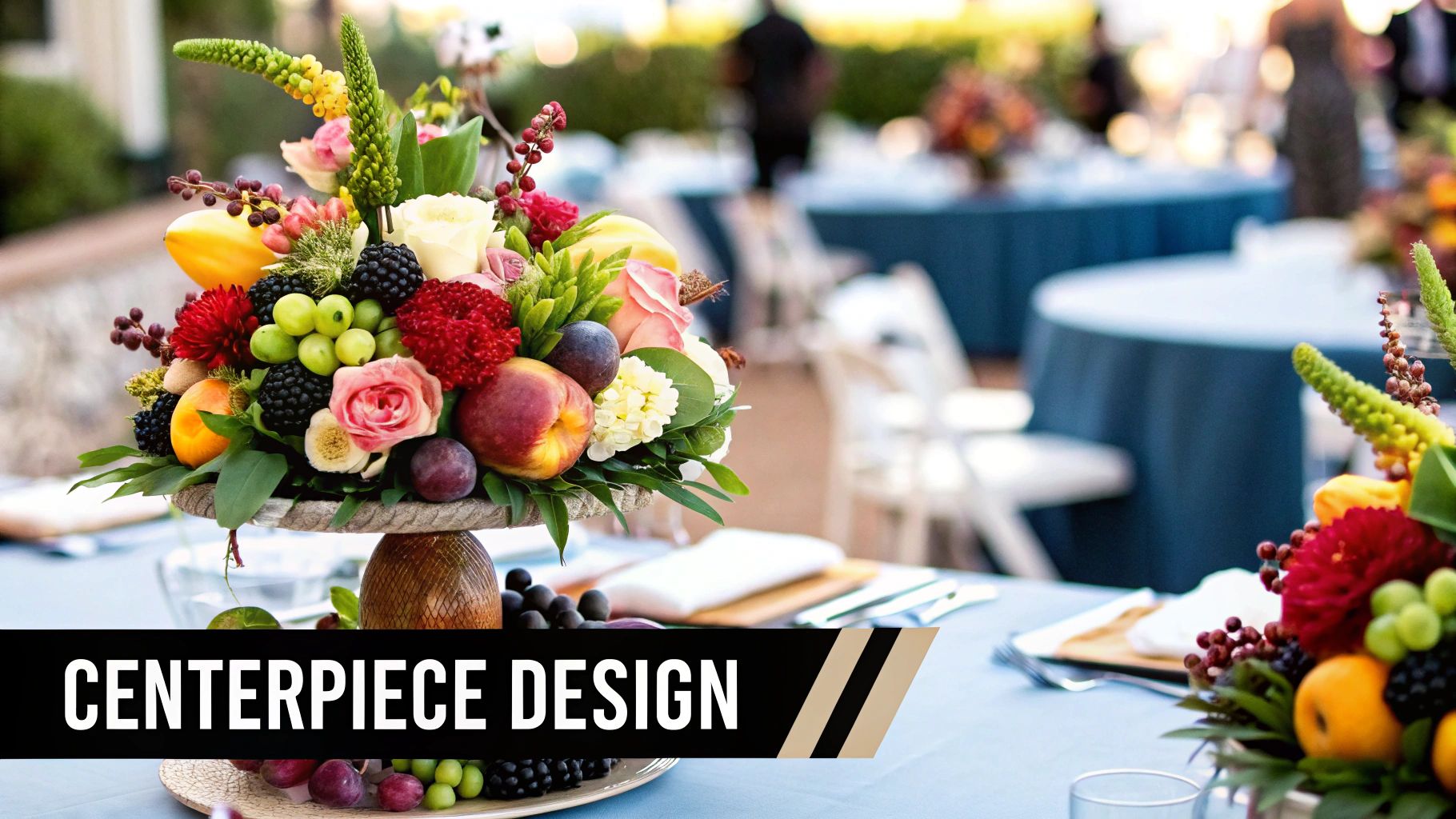
Traditional buffet lines often bring to mind long queues and uninspired food presentations. But modern catering display ideas are transforming these practical food lines into engaging culinary experiences. This new approach focuses on creating an immersive environment that invites guests to explore and enjoy the food.
Creating Multi-Dimensional Displays
A key element of reinventing the buffet is incorporating multi-dimensional displays. Rather than simply arranging dishes on a single table, consider using varied heights and depths to create visual appeal.
Tiered stands, for example, can showcase appetizers or desserts. Raised platforms can highlight main courses. This adds a sense of drama and abundance to the presentation.
Unexpected materials can also add a unique touch. Consider repurposed architectural elements, like vintage window frames or reclaimed wood, to create a distinctive backdrop. This not only adds visual interest but also tells a story and sets the mood for the event.
Strategic Food Placement
The placement of food plays a vital role in a successful buffet. Carefully consider the flow of traffic and place food items to minimize congestion. This means positioning popular dishes at separate stations to avoid long lines.
Creating separate stations for salads, main courses, and desserts, for instance, encourages guests to circulate and explore the entire buffet. Creating visual journeys through the layout also enhances the dining experience. Think of the buffet as a narrative, guiding guests through different culinary chapters with each station.
The growth of gourmet and specialty catering has fueled the demand for attractive displays. The catering services market is expected to reach USD 674.1 million by 2025. This expansion reflects the desire for personalized and visually impressive food arrangements. Appealing displays can increase customer interest by as much as 30% compared to standard catering.
Mixing Textures, Heights, and Serving Vessels
Finally, mixing textures, heights, and serving vessels can elevate even the most familiar dishes. Instead of using standard chafing dishes, consider incorporating unique serving pieces. You might be interested in: 5 Essential Supplies for Any Catering Company. This adds visual appeal and creates an Instagram-worthy experience for guests.
Serving salads in rustic wooden bowls or desserts on vintage china plates, for example, adds a touch of elegance and personality.
Remember, maintaining food safety and service efficiency is crucial. Ensure all serving vessels are food-safe and that the buffet layout allows for efficient service. This lets caterers maintain high standards while still delivering a memorable and visually appealing dining experience.
Interactive Food Stations That Create Memorable Moments
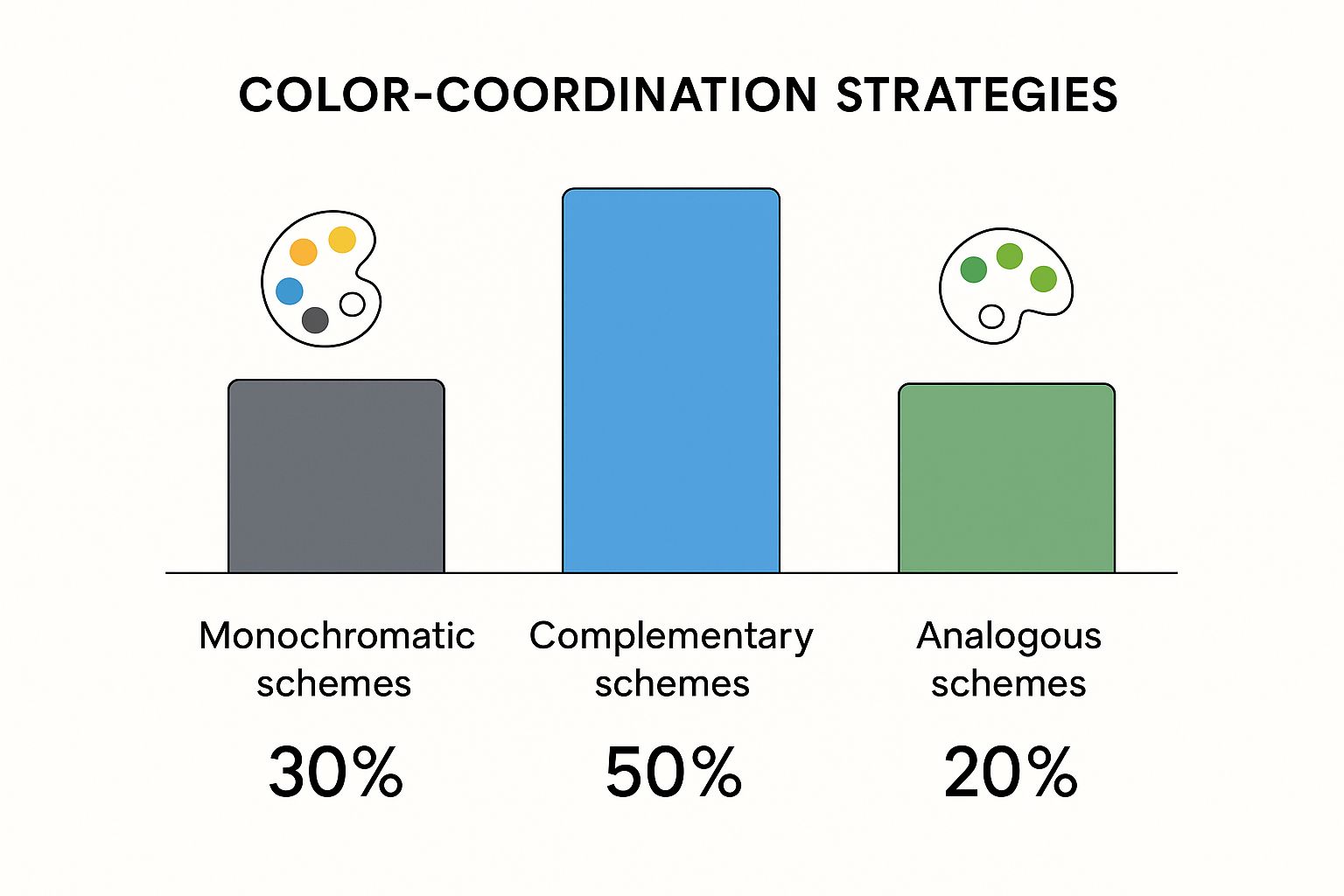
The infographic above illustrates some interesting data on color coordination for catering displays. It compares monochromatic, complementary, and analogous color schemes, revealing that complementary schemes are the most popular, used in 50% of displays. Monochromatic follows at 30%, with analogous schemes making up the remaining 20%. This data suggests that contrasting colors in your food displays are key for grabbing guests’ attention.
Interactive food stations are changing the way we think about catering. Instead of passively receiving their meals, guests become active participants, resulting in a more engaging and memorable experience. This increased engagement taps into the psychology of interaction, creating a stronger impression and a sense of excitement.
Designing Engaging Action Stations
Designing an interactive food station involves carefully balancing captivating chef showmanship with practical serving efficiency. Think of a live pasta-making station. Guests are entertained by watching the chef create their meal, adding a theatrical flair to the dining experience. However, the station must also be designed for efficient flow to avoid long lines and keep guests happy.
Here are some key factors to consider:
- Event Type: A formal corporate event might call for a sophisticated carving station, while a casual wedding reception could feature a build-your-own-taco bar.
- Budget: Interactive experiences can be adapted to suit any budget. A simple DIY popcorn bar is a much more cost-effective option than a chef-manned crepe station.
- Dietary Restrictions: Always offer options for guests with dietary needs. This could include gluten-free pasta at the pasta bar or vegan toppings at the burger station.
Logistics of Interactive Stations
Beyond the creative concepts, practical logistics are crucial for success:
- Power Requirements: Make sure you have enough power outlets to handle equipment like blenders, warming trays, and other necessary appliances.
- Staff Training: Your staff needs to be properly trained to manage interactive stations efficiently and handle guest requests with grace.
- Space Planning: Adequate space is essential for guests to comfortably interact with the station and avoid overcrowding.
Interactive food stations can range from elaborate chef-attended experiences to simpler self-serve setups. A chef-attended carving station, for example, brings an air of sophistication and allows for customized portions. On the other hand, a self-serve trail mix bar offers a casual, customizable snacking experience.
To further illustrate the possibilities and considerations, let’s examine a comparison of some popular concepts:
Before diving into specific examples, let’s take a look at a comparison of some popular interactive food station concepts. The table below highlights the key differences and similarities in terms of space, staffing, preparation, and guest appeal.
| Station Type | Space Required | Staff Needed | Preparation Time | Guest Appeal Rating |
|---|---|---|---|---|
| DIY Pizza Station | Medium (10×10 ft) | 2 | 2 hours | High |
| Hot Chocolate Bar | Small (5×5 ft) | 1 | 1 hour | Medium |
| Bloody Mary Bar | Small (5×5 ft) | 1 | 1 hour | Medium |
| S’mores Station | Medium (8×8 ft) | 1 | 30 minutes | High |
| Chef-Attended Carving Station | Large (12×12 ft) | 2 | 3 hours | High |
| Self-Serve Trail Mix Bar | Small (4×4 ft) | 0 | 30 minutes | Medium |
As the table demonstrates, each station type has unique requirements. Planning accordingly will ensure a smooth and enjoyable experience for your guests.
Examples of Interactive Food Stations
Here are a few more ideas to inspire you:
- DIY Pizza Station: Guests can create their dream pizzas with a variety of toppings.
- Hot Chocolate Bar: Ideal for winter events, offering different flavors, toppings, and marshmallows for a cozy treat.
- Bloody Mary Bar: A fun brunch option that lets guests customize their cocktails.
- S’mores Station: A crowd-pleasing classic, especially for outdoor gatherings. Consider incorporating creative event giveaways for an added touch.
By thoughtfully considering both the creative elements and the practical logistics, caterers can design truly memorable interactive food stations. These stations showcase culinary expertise while creating lasting impressions on guests. Even small details like using Eco-Friendly Disposable Food Containers can significantly enhance the overall experience.
Seasonal Storytelling Through Themed Display Concepts
Catering displays can be so much more than just presenting food. They can be powerful storytelling tools. Smart caterers use seasonal elements and thematic concepts to create cohesive presentations that amplify an event’s message. This goes beyond simple decor; it’s about crafting immersive environments that transport guests and build a genuine atmosphere.
Weaving Seasonal Narratives
Seasonal ingredients offer a natural starting point for themed displays. A fall harvest theme, for example, could incorporate pumpkins, gourds, and colorful autumn leaves. This creates a visual connection to the season and provides opportunities to showcase seasonal dishes. Consider incorporating unique giveaways at interactive food stations to create a memorable experience. Draw inspiration from successful event giveaway strategies. A winter wonderland theme, conversely, might feature ice sculptures, sparkling snowflakes, and a menu focused on comfort food.
Developing Thematic Concepts
Thematic concepts can transport guests to another time or place. A “Roaring Twenties” theme might feature Art Deco-inspired displays, flapper dresses, and a menu reflecting the era’s culinary trends. This immersive experience adds a layer of entertainment and engagement. Alternatively, a “Tropical Getaway” theme could use vibrant colors, lush greenery, and exotic fruits to evoke a sense of escape.
Cost-Effective Thematic Elements
Creating immersive environments doesn’t require extravagant spending. Repurposing materials is a smart strategy. Wooden crates used for a rustic theme can be repainted and reused for a vintage display. Sourcing elements from nature, like branches, flowers, and stones, offers a cost-effective and visually appealing solution.
Balancing Presentation and Practicality
While creative vision is essential, practicality is important. Temperature control is crucial for food safety. Ensure hot foods stay hot and cold foods stay cold, regardless of the display’s complexity. Serving efficiency is also key. Even the most beautiful display is ineffective if guests face long lines. A seamless flow and accessible food arrangements are essential. Guest comfort matters. Ensure there’s enough space to navigate the displays comfortably, especially in high-traffic areas.
Creating Signature Branded Moments
Themed displays offer a prime opportunity to create signature branded moments without the cost of custom fabrication. Incorporating a company logo into ice sculptures or using brand colors in floral arrangements subtly reinforces brand identity. These personalized touches elevate the event and create lasting impressions. Small details, like custom-printed napkins, can enhance the thematic experience.
Unexpected Serving Vessels That Elevate Ordinary Foods
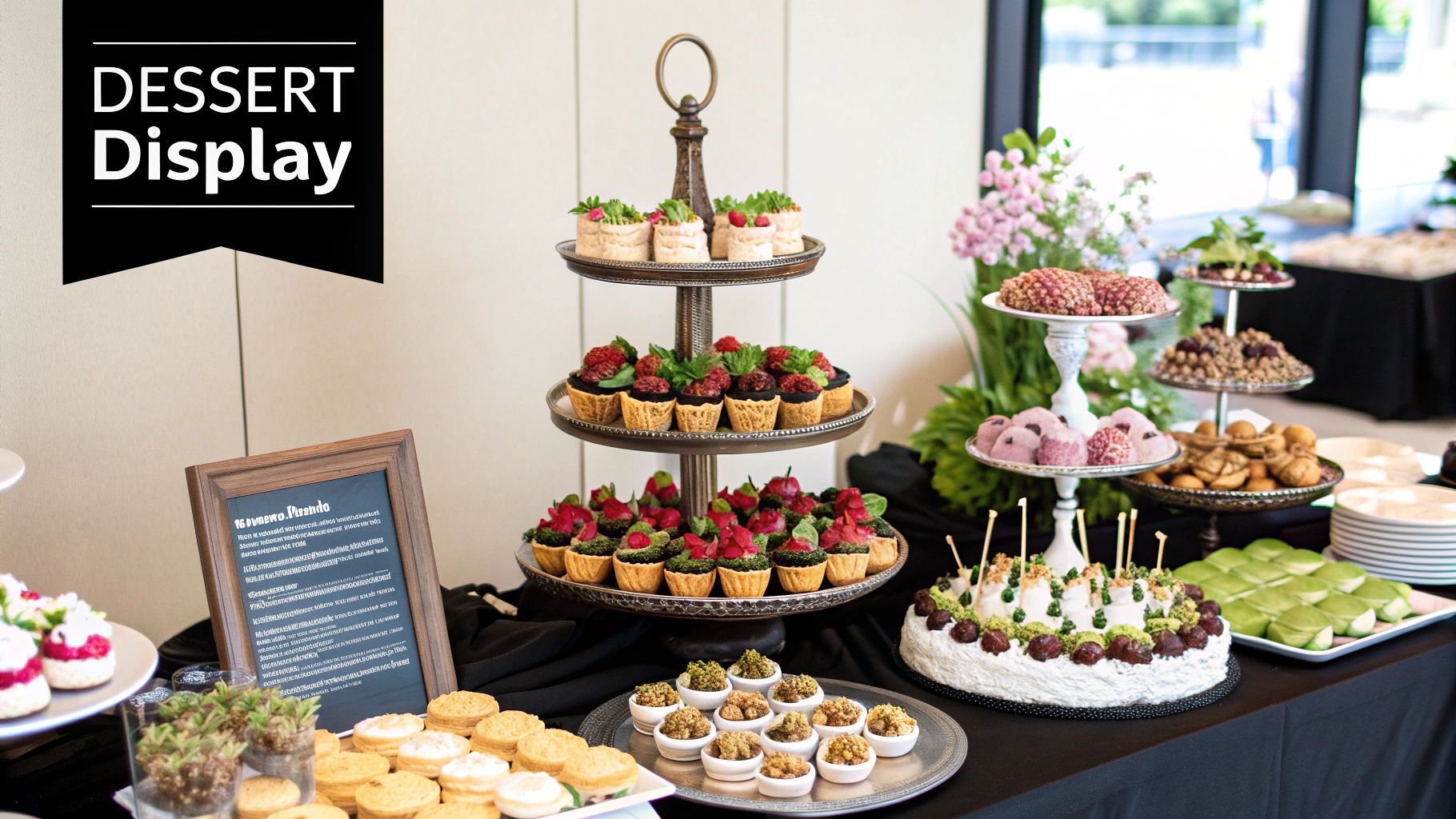
Forget standard chafing dishes and plain white platters. Today’s successful caterers are ditching the conventional and embracing unique serving vessels to transform even the simplest dishes into memorable experiences. This shift in presentation elevates the entire dining experience, making it more engaging and visually appealing.
From Repurposed to Custom-Made
The possibilities are endless when it comes to alternative serving options. Repurposed architectural elements can add an unexpected touch, while custom-designed pieces offer a unique flair.
Imagine serving appetizers on miniature slate tiles. Or perhaps presenting desserts in vintage teacups. These small details add personality and visual interest. Custom-made pieces can even become a signature element of your brand, setting you apart from the competition and leaving a lasting impression.
Practical Considerations for Serving Vessels
Creativity is essential, but practicality is equally important. Temperature retention is key, especially for hot or cold dishes. Stoneware, known for its heat retention, is a great choice for warm appetizers.
Durability is also a must. Serving vessels will be transported and handled frequently, so choose robust materials that can withstand the rigors of catering events. Easy cleaning is another important factor. Select materials that are simple to clean and sanitize, streamlining your post-event cleanup process. For more information on easy-to-clean options, you might be interested in: Eco-Friendly Disposable Food Containers.
Budget-Friendly Approaches to Building Your Collection
Building a distinctive collection of serving vessels doesn’t have to be expensive. Vintage sourcing can uncover unique and affordable pieces, from antique silver platters to charming ceramic bowls.
Multi-purpose investments, like wooden crates used for both display and transport, can stretch your budget further. Rental options are also a smart choice for specialized pieces needed only occasionally. This gives you access to a wider variety without the cost of outright purchase.
Food Safety and Creative Presentation
While embracing creativity, always prioritize food safety. Ensure all materials are food-safe and comply with health regulations. When repurposing items, thorough cleaning and sealing with a food-safe sealant is crucial to prevent contamination.
Consider how your chosen vessels will impact serving efficiency and guest comfort. Balancing creative presentation with practical functionality is key to a successful and enjoyable catering experience. This balance allows you to showcase your culinary talent while maintaining the highest standards of food safety and guest satisfaction.
Strategic Lighting and Technology for Show-Stopping Displays
In the competitive catering world, captivating displays are key to attracting attention and making an event memorable. Strategic lighting and smart use of technology can transform ordinary food presentations into extraordinary visual experiences, encouraging guests to share photos on social media and boosting your brand’s visibility. This section explores accessible lighting techniques and technology integration to elevate your catering displays, turning them into true conversation starters.
The Power of Portable Lighting
Lighting plays a vital role in showcasing food’s textures, colors, and overall appeal. Many venues, however, pose lighting challenges. Portable lighting solutions offer a practical fix, overcoming these limitations to create the perfect ambiance.
- Battery-Operated Lights: These offer flexibility, ideal for venues with limited power outlets. Small, battery-powered spotlights can highlight specific dishes or create dramatic shadows.
- Plug-and-Play Systems: Simple, user-friendly lighting systems are easy to find, eliminating the need for complex electrical setups. These systems often feature adjustable brightness and color temperature controls, letting you customize the lighting for each unique event.
For example, strategically placed uplights can wash a wall with color, creating a beautiful backdrop that complements your food display. String lights or lanterns can also add a touch of whimsy and warmth to outdoor events.
Integrating Technology for Enhanced Guest Experience
Technology offers exciting new ways to enhance catering displays and better engage guests. These additions can be both practical and visually appealing.
- LED Accents: Subtle LED strip lighting incorporated into displays adds a modern touch and highlights architectural features. For instance, illuminating the edges of a tiered cake stand adds elegance and makes desserts even more tempting.
- QR-Enabled Information Systems: Interactive QR codes placed near dishes can give guests details about ingredients, allergens, and nutritional values. This addresses practical needs while offering a modern, tech-forward approach.
These technological integrations not only improve the guest experience, they can also streamline operations. Digital displays, for example, can be instantly updated with menu changes or special announcements. This eliminates the need for printed materials and reduces waste.
Maximizing Impact While Minimizing Disruption
The key to using lighting and technology effectively is to enhance the food, not overshadow it. Consider these best practices:
- Balance: Use lighting and technology strategically to showcase the food’s natural beauty without being distracting. Avoid overly bright or flashing lights that detract from the presentation.
- Integration: Seamlessly integrate technology into the display, ensuring it complements the overall aesthetic. Hide wires and cables, opting for devices that blend with the decor.
- Simplicity: Keep the technology user-friendly for both your team and your guests. Complex systems can be cumbersome and disrupt the event’s flow.
By following these guidelines, you can create catering displays that are both visually impressive and technologically advanced, truly enhancing the guest experience and leaving a lasting impression.
Ready to elevate your catering presentations with high-quality, eco-friendly disposable packaging? Visit MrTakeOutBags.com today to explore our wide selection of takeout containers, bags, and other catering essentials that enhance both presentation and practicality.



Comments are closed.