

The best eco-friendly takeout containers depend on two things: the food going in and what happens to the container after the meal. Bagasse (sugarcane fiber) clamshells and bowls suit hot, greasy entrées. Compostable paper cups and soup containers with plant-based linings suit soups and coffee. PLA works for cold deli items and salads only. If your area has no commercial composting, recyclable paperboard or PP is often the more practical choice.
Quick Pick: What Are the Best Sustainable Takeout Containers?
| Food type | Best material | Why | Avoid |
|---|---|---|---|
| Burgers, fried food, saucy entrées | Bagasse clamshell | Rigid, holds heat, stands up to grease better than plain paper | PLA (softens with heat), unlined paperboard |
| Rice, noodle and grain bowls | Bagasse bowl with fitted lid | Deep shape, handles hot and oily food | PLA bowls, thin paper bowls for long trips |
| Soups, stews, chili | Lined paper soup container | Lining holds liquid, lid seals for travel | Clamshells, PLA containers |
| Cold salads, deli, cut fruit, sides | PLA deli container | Clear, so customers see the food | Any hot or warm food |
| Coffee, tea, hot drinks | Paper cup with plant-based lining | Built for hot liquids | PLA cold cups |
| Areas with no commercial composting | Recyclable PP or clean paperboard | Matches the bins your customers actually have | Paying more for compostables that will be landfilled |
Biodegradable vs Compostable vs Recyclable: What the Labels Actually Mean
These three words get used as if they mean the same thing. They don’t, and the difference decides whether your packaging choice does anything useful.
- Biodegradable only means a material will break down eventually through natural processes. The term has no set timeframe or required conditions, so on its own it tells you very little. This is why most shoppers searching for biodegradable food packaging are better served by looking for a compostable certification.
- Compostable means the item is designed to break down into compost under defined conditions, and it can be tested and certified against a standard.
- Recyclable means the material can be collected and made into new products, but only if local programs accept it and the item is clean enough. Food-soiled molded fiber and greasy paperboard are generally not recyclable, so compost or trash are the realistic outcomes for those.
The FTC Green Guides also matter here if you print claims on your packaging or menu. The FTC advises against broad, unqualified “green” or “eco-friendly” claims, and says compostable claims should be qualified when an item can’t be composted at home or when commercial composting isn’t available to a substantial majority of consumers. A line like “Commercially compostable. Facilities may not exist in your area” keeps you on safer ground.
Certifications to Look For: BPI, ASTM D6400 and D6868
The most common compostable certification in the U.S. comes from BPI. BPI certifies products against ASTM D6400 (for compostable plastics such as PLA) and ASTM D6868 (for compostable coatings on paper and fiber). Certified items must reach at least 90% disintegration within 12 weeks under industrial composting conditions.
That test reflects a commercial facility, not a backyard bin. Only products with BPI’s separate Home Compostability certification are designed for home composting. For a deeper look at certification marks and how to verify them, see our guide to compostable food containers.
Why Commercial Composting Access Matters
A certified compostable container only delivers its benefit if it reaches a facility that accepts it. Many composters take food scraps but not packaging, and some accept only certain items. Before you pay for compostables, call your hauler or local composter and ask exactly what they take. If the answer is “nothing,” a recyclable container your customers can put in the blue bin may be the better fit.
Eco-Friendly Takeout Container Materials Compared
Here is how the common eco friendly disposable food containers stack up in daily kitchen use. Heat and microwave performance vary by manufacturer, so treat this as a starting point and confirm on each product’s spec sheet.
| Material | Hot food | Grease/moisture | Microwave | End of life | Relative cost | Best for |
|---|---|---|---|---|---|---|
| Bagasse (sugarcane fiber) | Yes | Reasonably good | Often yes (check spec) | Commercial compost if certified; not recyclable when soiled | Low to moderate | Hot entrées, fried food, bowls |
| Molded fiber (wood or recycled pulp) | Yes | Fair to good, depends on treatment | Check spec | Commercial compost if certified; not recyclable when soiled | Low to moderate | Clamshells, trays, drier foods |
| Bamboo fiber | Yes | Fair to good | Check spec | Commercial compost if certified | Moderate | Clamshells and boxes with a natural look |
| PLA (plant-based plastic) | No | Good for cold, wet food | No | Commercial compost only, if certified | Moderate | Cold deli, salads, cut fruit |
| PLA-lined paper (such as Planet+) | Yes (cups and soup containers) | Good | Not recommended | Commercial compost if certified | Moderate to higher | Coffee, soup, hot liquids |
| Kraft paperboard | Yes | Depends on lining | Depends on lining and handles | Recyclable when clean; check lining | Low to moderate | Folded boxes, bakery, dry or lightly sauced food |
| Recycled PET / PP | PP yes, PET no | Very good | PP usually yes, PET no | Recyclable where accepted | Low to moderate | Areas with recycling but no composting |
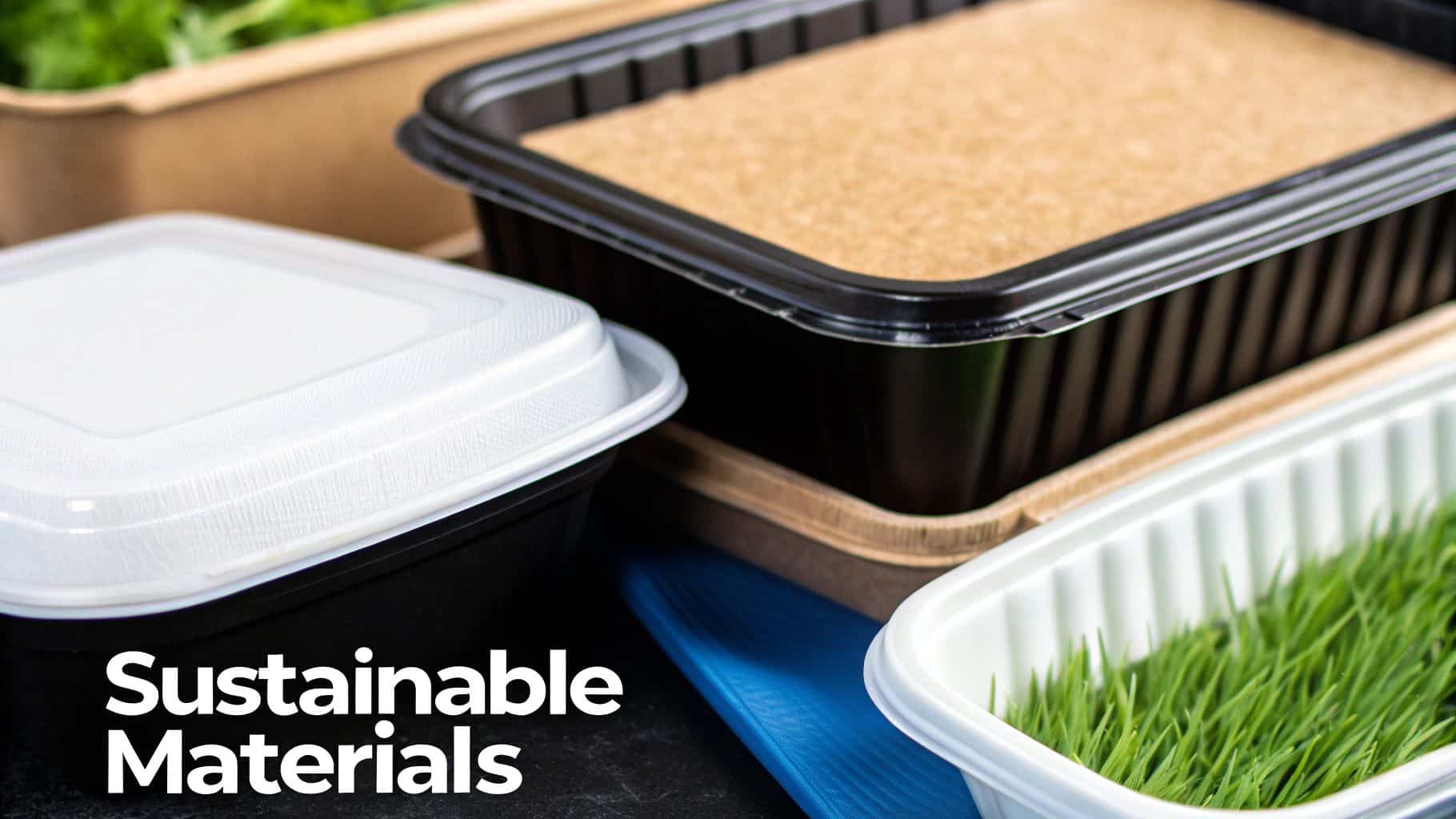
Two quick notes on fiber containers. First, bagasse handles moisture and grease reasonably well for most takeout, though very wet dishes on a long delivery can still soften the walls. Second, grease resistance in fiber packaging used to come from PFAS treatments. The FDA announced on February 28, 2024 that grease-proofing substances containing PFAS are no longer being sold by manufacturers for food contact use in the U.S. If PFAS-free status matters for your local rules, ask your supplier to confirm it in writing for each item.
Best Eco-Friendly Containers by Menu Item
Material properties only matter when they line up with your menu. Here is how to pick the best eco-friendly takeout containers dish by dish.
Hot Entrées and Fried Food: Bagasse Clamshells
Burgers, fried chicken, plated entrées and anything with sauce need a rigid box that tolerates heat and oil. A hinged bagasse clamshell is the standard pick. Our 9 x 9 x 3 in. sugar cane clamshell is oil and cut resistant, safe for microwave and freezer use, and BPI certified to ASTM D6400. It is made from sugar cane fibers left over from sugar refining.
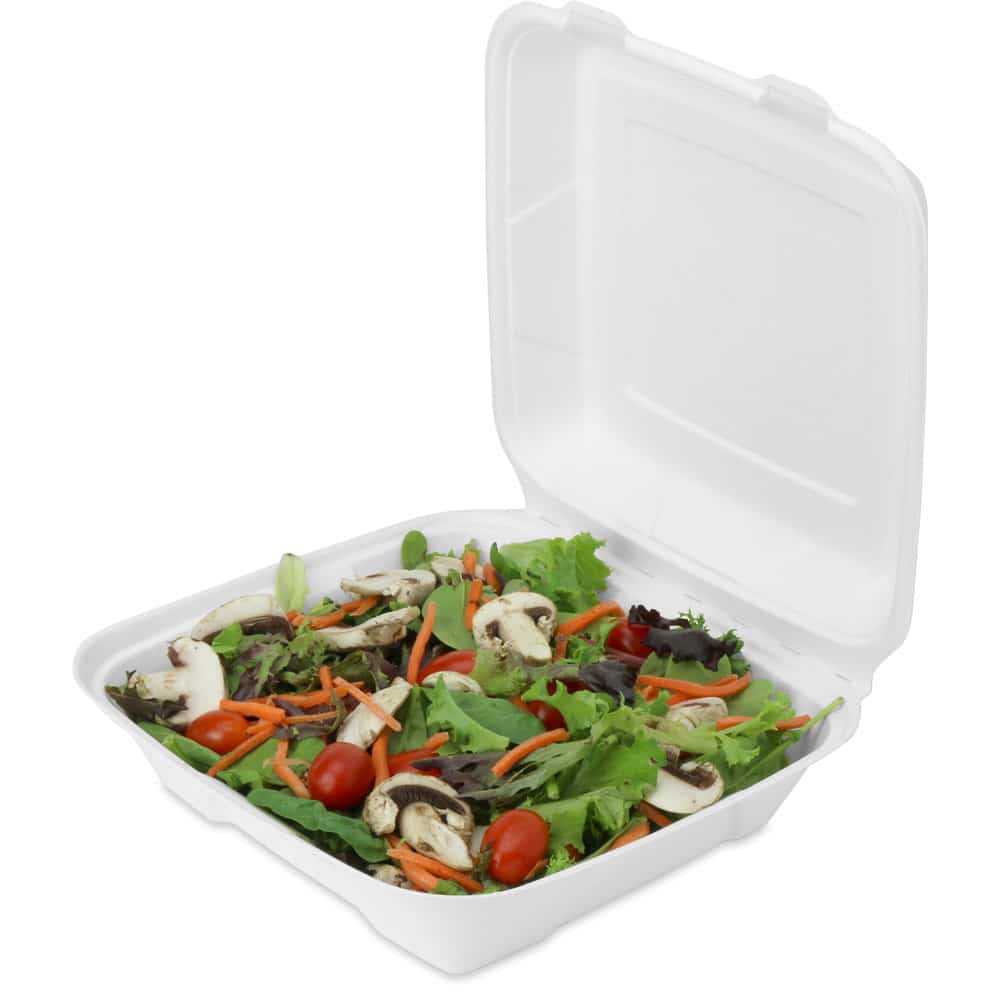
If you prefer a different look or need other sizes, our bamboo compostable takeout boxes cover similar hot-food uses. Whatever you choose, test it with your saucier dishes before switching the whole menu.
Bowls, Grain and Noodle Dishes: Bagasse Bowls
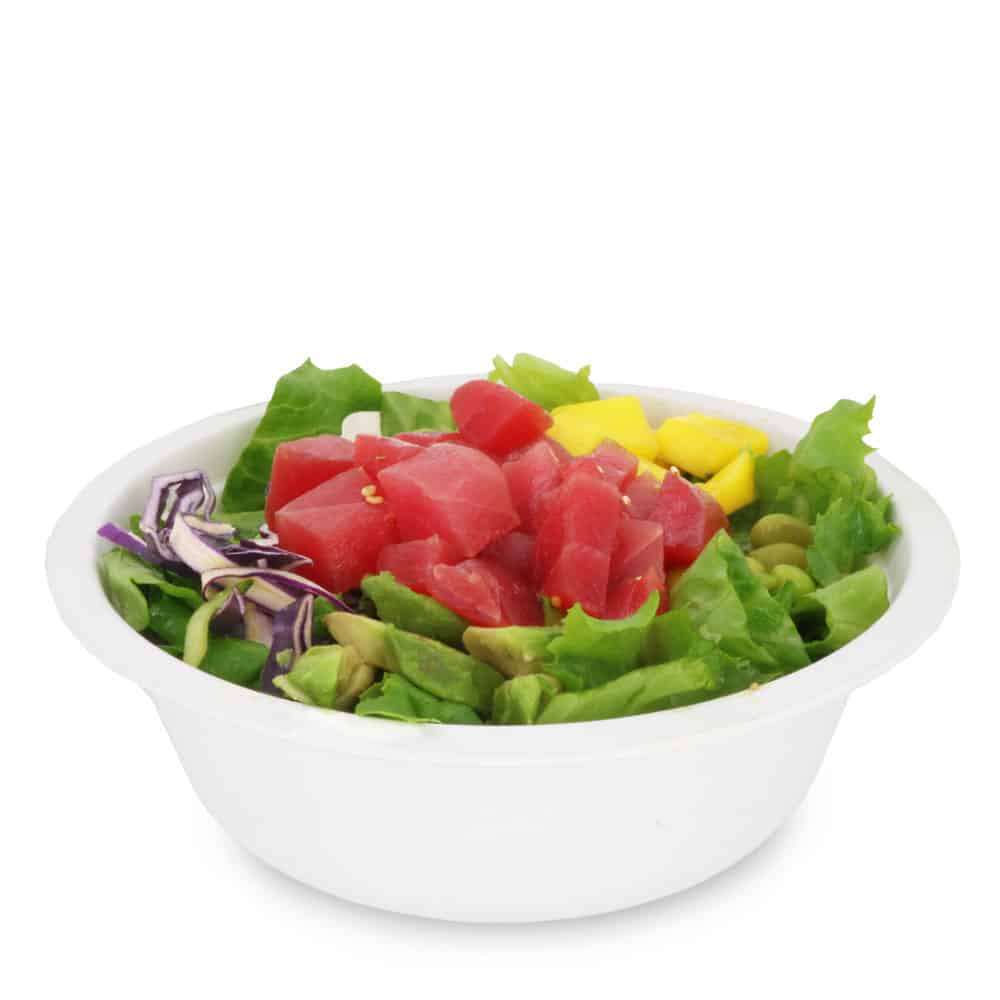
Rice bowls, poke, ramen-style noodles and grain salads need depth and a lid that fits snugly. A 16 oz. sugar cane fiber bowl works for most single portions. The product page lists it as microwaveable and freezer safe, oil and cut resistant, and compostable in both home and commercial facilities. It measures 6 inches across the top and 2-1/8 inches high, and lids are sold separately (item XFSES-L001-16-LID).
For broth-heavy noodle soups, move to a lined soup container instead. Fiber bowls are better for drier or lightly sauced dishes.
Soups: Compostable Paper Soup Containers
Soup, chili and stew need a liquid-tight body and a lid that seals. Paper soup containers with a plant-based lining do this job better than any clamshell. Browse our compostable soup containers and match the lid to the cup size before ordering.
Hot holding still applies once the soup leaves the kettle. The FDA Food Code calls for holding hot food at 135°F (57°C) or above and cold food at 41°F (5°C) or below. The Food Code is a model, and your local health code may differ.
Cold Deli, Salads and Sides: PLA Deli Containers
For pasta salad, cut fruit, coleslaw, dressings and cold sides, clear PLA containers show off the food and stack well in a grab-and-go case. Our 16 oz. PLA deli container is printed with a green band and the BPI compostable logo, which helps customers and compost sorters identify it. Lids are sold separately.
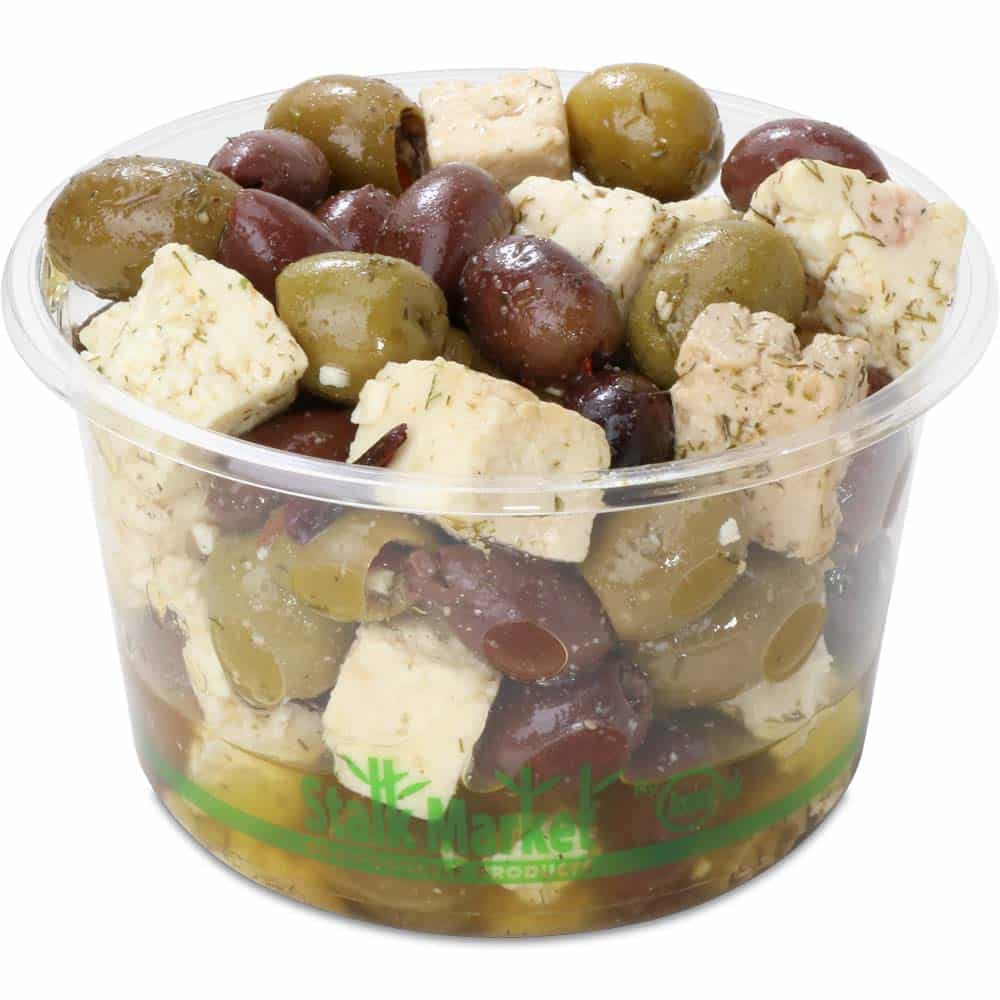
One firm rule: never use PLA for hot food. PLA softens at temperatures well below the 135°F hot-holding mark, so a hot side can warp the container or cause leaks. The PLA-DR16 product page states it plainly: for cold food use only.
Coffee and Beverages: Planet+ Paper Cups
Hot coffee and tea need a paper cup with a liquid-tight lining. Planet+ cups use a biopolymer lining made from plant sugars instead of a petroleum-based coating. The 12 oz. cup is BPI certified to ASTM D6400, BPA free, and double seamed to withstand boiling liquids. Custom printing is available with a minimum order of 50,000 cups per size.
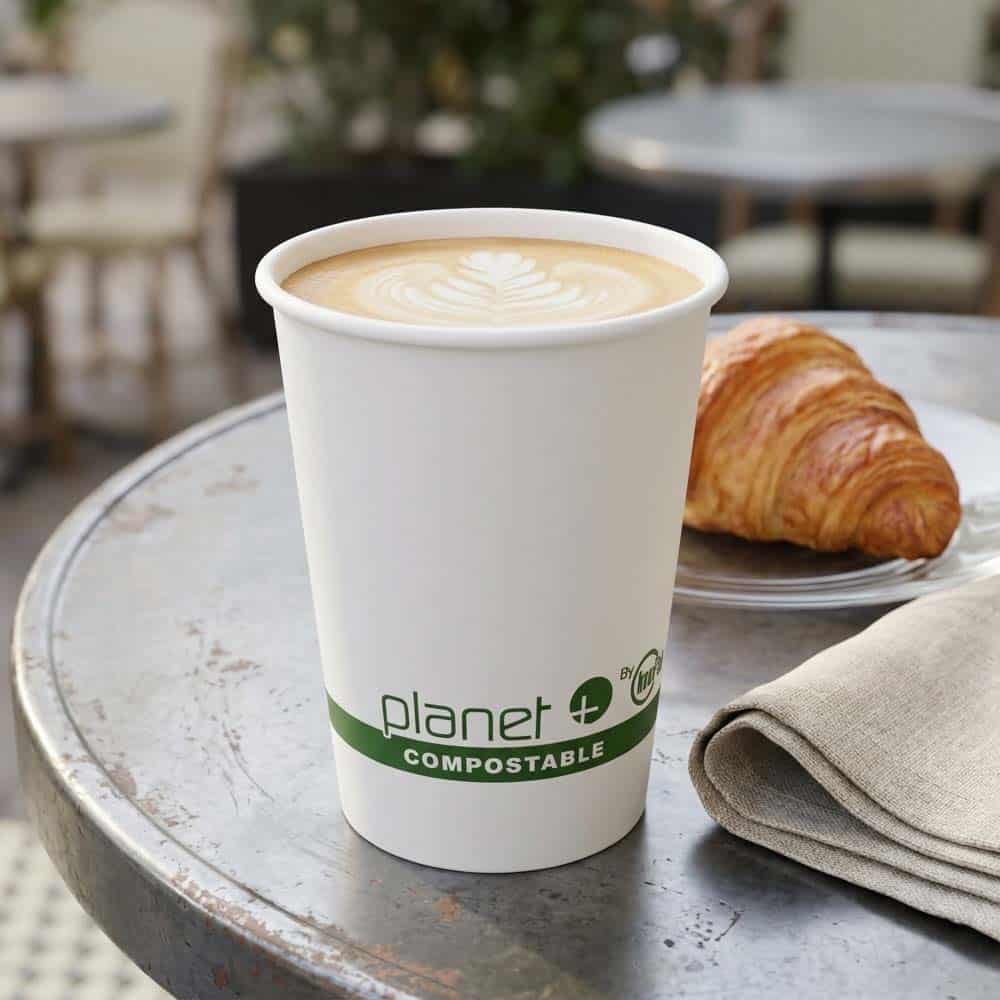
See the full range of Planet+ compostable coffee cups for other sizes and matching options.
How to Choose Eco-Friendly Food Packaging for Your Restaurant or Small Business
Eco friendly food packaging for restaurants and eco friendly food packaging for small business come down to the same checklist. Work through it before you place a large order.
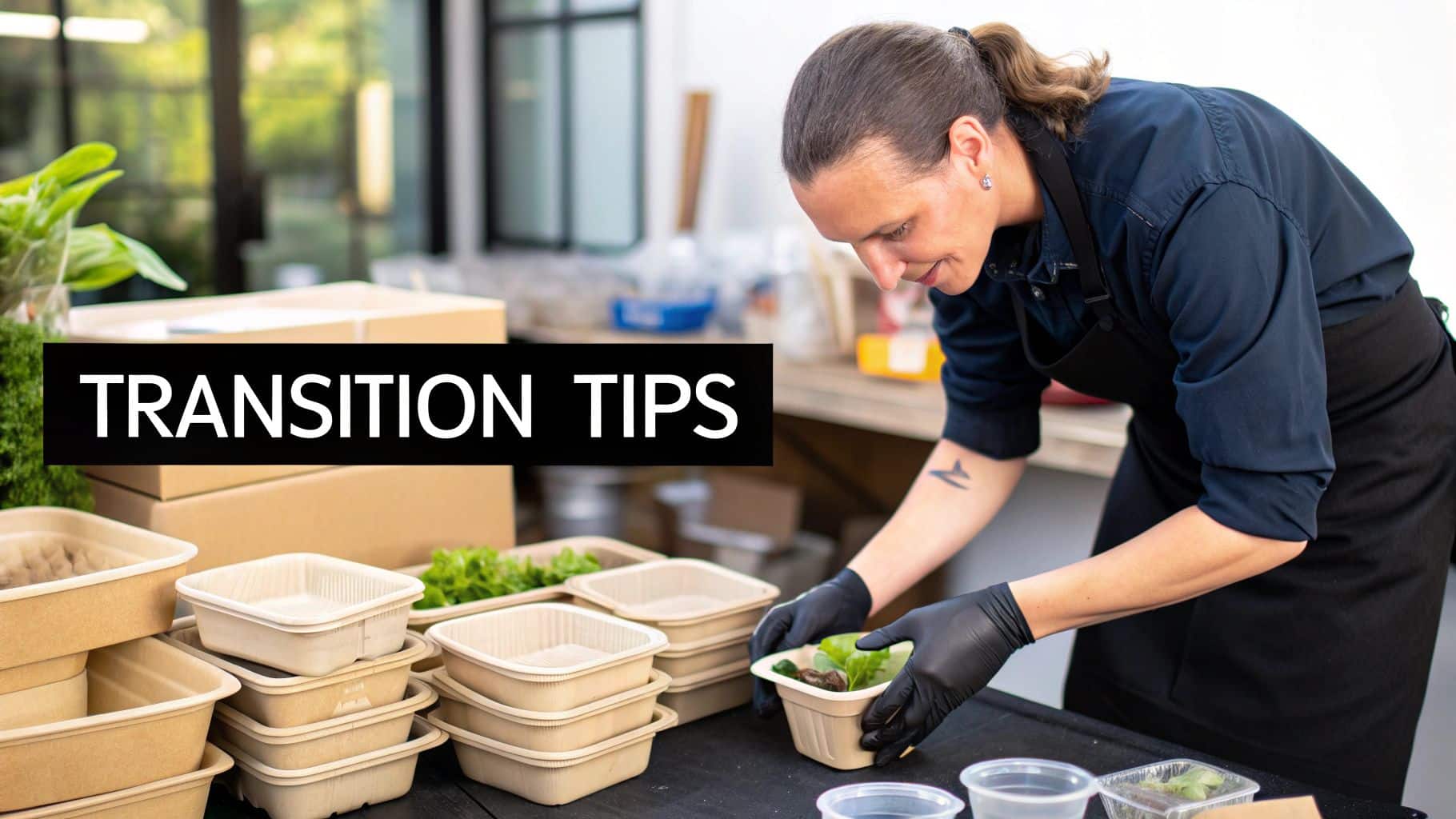
- Local bans and rules. Rules on foam containers, PFAS in packaging and labeling differ by state and city. Check with your local health department and environmental agency, and read our overview of food packaging regulations. If you deliver through third-party apps in California, AB 3336 requires bags or containers of ready-to-eat food to be closed with a tamper-evident method before the driver takes them. The law does not prescribe a specific method.
- Composting and recycling access. Ask your hauler what they accept. Compostables make the most sense where commercial composting takes packaging. Elsewhere, recyclable PP or clean paperboard may be the more honest choice.
- Food temperature and travel time. Match the container to the hottest and wettest thing on your menu, then test it over your longest delivery route. FoodSafety.gov advises that perishable food should not sit out more than 2 hours, or 1 hour above 90°F, which is worth keeping in mind for catering drop-offs and food truck events.
- Cost per unit vs case quantity. Compare the per-container cost, not the case price. Also count storage space: a case of 1,000 cups or 500 bowls needs a spot in your dry storage.
- Branding. Stock kraft and white containers pair well with custom stickers, sleeves or printed bags. Custom-printed cups and containers usually carry high minimums, so they suit busier operations.
Cottage food and home bakers have one more step: cottage food laws vary by state, and many limit or prohibit selling across state lines or by mail. Check your state’s rules before planning shipped orders.
Don’t Forget the Rest of the Order
A compostable clamshell loses some of its point if it arrives with plastic forks and a plastic bag. Round out the order with matching pieces:
- Cutlery. Switch to compostable cutlery, and consider offering it only on request to cut waste further.
- Bags. Paper bags remain the default carryout option. The square-bottom, self-opening design most restaurants use traces back to a machine patented by Charles Stilwell in 1883, known as the S.O.S. (self-opening sack). Handled bags make multi-container orders easier to carry.
- Cups. Use lined paper cups for hot drinks, as covered above, and PLA cold cups for iced drinks.
- Bakery items. Pastry boxes, bags and windowed cartons have their own options. See our guide to eco-friendly bakery packaging.
Reusable Alternatives to Single-Use Takeout Containers
Reusable container programs work through a deposit or a membership. Customers get food in a durable container, return it, and the restaurant or a service partner washes and reuses it. These programs make the most sense with a steady base of repeat customers, such as office catering, campus dining or a neighborhood café, and when you have dishwashing capacity and space to store returns.
They are harder to run for delivery-heavy or one-time customers, since containers that never come back become a cost. Ask your local health department how it handles reusable takeout containers before you launch. Most businesses keep a single-use option alongside any reuse program.
Why Restaurants Are Switching: Regulations and Market Growth
Published estimates of the takeout containers market vary widely between research firms, so we have left out projections here. The clearer drivers are regulatory: the FDA reported in 2024 that PFAS grease-proofing substances are no longer sold for U.S. food contact use, and state and local rules on foam and packaging continue to change. Checking your local requirements once a year is a practical habit.
Frequently Asked Questions
What are the best eco-friendly takeout containers?
The best choice depends on the food and the disposal options in your area. Bagasse clamshells and bowls work well for hot, greasy food, lined paper containers suit soup and coffee, and PLA is best for cold deli items. Where commercial composting isn’t available, recyclable PP or clean paperboard is often more practical.
What are the best compostable takeout containers?
Look for containers certified by BPI to ASTM D6400 or ASTM D6868, such as certified bagasse clamshells, PLA deli containers for cold food, and plant-lined paper soup cups. Certification means the item met defined breakdown standards under industrial composting conditions. Confirm that a local facility accepts compostable packaging before you switch.
Are biodegradable takeout containers better than compostable ones?
Not usually. “Biodegradable” has no set timeframe or conditions, while “compostable” can be tested and certified against a standard. For biodegradable takeout containers, look for a compostable certification to know how the item is expected to break down.
What are the best eco-friendly to-go boxes for hot food?
Bagasse (sugarcane fiber) clamshells are the most common choice for hot food because they are rigid and handle grease and moisture reasonably well. Bamboo and molded fiber boxes are alternatives. Check each product’s spec sheet for heat and microwave use.
Can PLA containers hold hot food?
No. PLA softens at temperatures well below hot-holding temperatures, so it can warp or leak with hot food. Use PLA for cold items only and choose bagasse or lined paper for anything hot.
What are reusable alternatives to single-use takeout food containers?
The main option is a deposit or return program, where customers bring back durable containers to be washed and reused. These work best with regular customers and enough dishwashing capacity. Check with your local health department before starting one.
Once you know which materials match your menu and your local disposal options, you can compare sizes and case quantities in our eco-friendly food packaging category. Start with the container for your best-selling dish, test it on a real delivery route, and expand from there.


Comments are closed.