
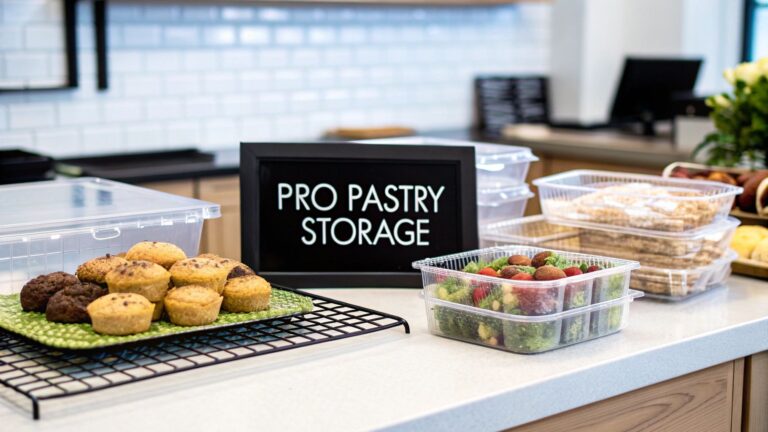
The short answer on how to store pastries: keep plain and fruit pastries like croissants, danishes, turnovers and scones covered at room temperature and serve them within 1 to 3 days (per the What’s Cooking America storage chart). Anything filled or topped with cream, custard or cream cheese must go in the fridge within 2 hours (FDA guidance via Allrecipes). To hold pastries longer than a few days, freeze them, then re-crisp in a 350°F oven for a few minutes before serving.
Below is a quick-reference chart by pastry type, followed by detailed sections on croissants, puff pastry, freezing, and packaging pastries for sale or take-home. It is written for bakeries, cafes, restaurants and caterers that need consistent shelf-life practices, and it works just as well for home bakers.
Quick Reference: How to Store Pastries by Type
Use this table as a starting point. Counter and freezer times are quality guidelines for best texture and flavor. The 2-hour limit for perishable fillings is a food safety rule, not a quality suggestion.
| Pastry type | Counter | Fridge | Freezer | Notes |
|---|---|---|---|---|
| Croissants (plain, chocolate, almond) | 1 to 3 days, covered | Not recommended (stales faster) | About 3 months, wrapped airtight | Re-crisp at 350°F for a few minutes |
| Danishes (plain or fruit) | 1 to 3 days, covered | Required if filled with cream cheese or custard | About 3 months | Cream cheese danishes: refrigerate within 2 hours |
| Puff pastry, baked (unfilled or fruit) | 1 to 3 days, loosely covered | Only if the filling requires it | About 3 months | Sealed plastic softens the layers |
| Cream or custard filled (napoleons, cream horns, custard tarts) | 2 hours maximum | 2 to 3 days | Not recommended once filled | Keep in a refrigerated case for display |
| Fruit pastries (turnovers, hand pies) | 1 to 3 days, covered | Needed if topped with cream or custard | About 3 months | Freeze before glazing if possible |
| Scones | 1 to 3 days, covered | Not needed | About 3 months | Warm briefly to refresh |
| Muffins | 1 to 3 days, covered | Needed with cream cheese filling or frosting | About 3 months | Line containers with paper towel to stop sticky tops |
| Éclairs and choux (filled) | 2 hours maximum | 2 to 3 days | Freeze unfilled shells only | Fill as close to serving as you can |
| Macarons | Short periods only | Yes, in an airtight container | Yes, in an airtight container | Bring to room temperature before serving |
Counter and freezer times for pastries, danish and similar items come from the What’s Cooking America chart, which also lists cream and custard pies at 2 to 3 days in the refrigerator.
Room Temperature Storage: The Right Choice for Most Pastries
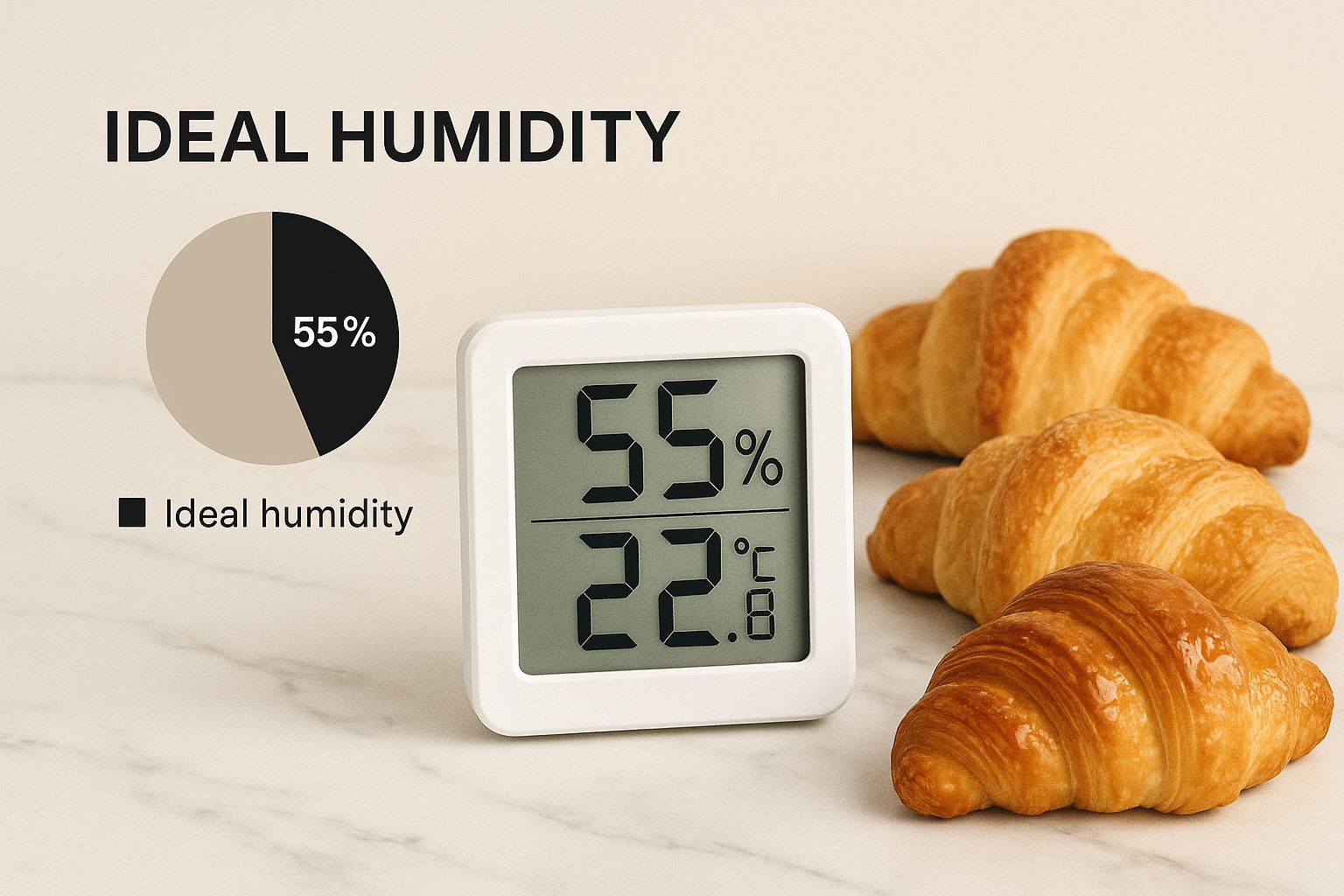
Plain, butter-rich pastries keep their texture best at room temperature. Croissants, danishes without dairy fillings, scones, muffins and fruit turnovers all fall into this group. The goal is to slow moisture loss without trapping so much humidity that crisp layers turn soft.
Pick a cool, dry spot away from ovens, proofers, dishwashers, windows and coffee machines. Heat softens butter in laminated doughs, and steam from nearby equipment makes crusts limp. Big temperature swings also cause condensation, which is the fastest way to ruin a flaky pastry.
How to Store Baked Goods on the Counter
- Cool completely first. Packing warm pastries traps steam, which softens crusts and can encourage mold.
- Match the cover to the pastry. Laminated pastries (croissants, puff pastry, danishes) do better in a paper bag, a bakery box or a loosely covered container. Muffins and scones can go in a closed container lined with a paper towel to absorb excess moisture.
- Store in a single layer. Stacking crushes flaky layers and makes glazes stick. Use parchment between layers if you must stack.
- Keep types separate. Moist items like fruit pastries release humidity that softens crisp ones stored next to them.
Cookies, brownies, bars and cakes follow similar rules with a few differences. Our guide to the best way to store baked goods covers those in detail.
How to Keep Pastries Fresh Overnight
For an overnight hold, let pastries cool fully, place them in a paper bag or a covered bakery box, and leave them on the counter. In the morning, warm them in a 350°F oven for a few minutes to bring back the crisp exterior. Skip the fridge for plain pastries overnight; it dries them out faster than the counter does. The exception is anything with a perishable filling, which must be refrigerated.
Do Pastries Need to Be Refrigerated?
Only when the filling or topping is perishable. Pastries made with cream, custard, whipped cream, pastry cream or cream cheese must be refrigerated within 2 hours. The general USDA rule from FoodSafety.gov is that perishable foods should not sit out more than 2 hours, or more than 1 hour when the temperature is above 90°F. That shorter window matters for outdoor markets, catering setups and hot kitchens.
Common pastries that belong in the fridge:
- Cream cheese danishes and cheese-filled croissants
- Éclairs, cream puffs and other filled choux
- Napoleons, mille-feuille and cream horns
- Custard tarts and fruit tarts with pastry cream
- Anything with whipped cream or cream cheese frosting
Why the Fridge Hurts Plain Pastries
Refrigeration actually speeds up staling in bread-like doughs. According to Serious Eats, starch retrogradation (the process that makes baked goods firm and dry) happens faster at cold temperatures above freezing, while freezing slows it dramatically. That is why a plain croissant tastes older after a night in the fridge than after a night on the counter.
Refrigerating Filled Pastries Without Ruining Texture
- Use an airtight container or covered clamshell so pastries do not absorb odors from onions, garlic or other strong foods.
- Keep filled pastries in a single layer so the filling is not pressed out.
- For display, hold cream and custard items in a refrigerated case rather than on an open counter.
- If the pastry shell is separate from the filling, store them apart and assemble close to service.
How to Store Croissants
Croissant storage comes down to timing. Day one, they need almost nothing. Days two and three, they need a cover and a reheat. Past that, they need the freezer.
How to Keep Croissants Fresh for 2 Days
Let croissants cool, then store them at room temperature in a paper bag or a bakery box. Paper slows drying while letting some moisture escape, which protects the flaky exterior. A sealed plastic bag keeps them softer but the layers lose their crunch. Before serving, warm them in a 350°F oven for a few minutes to re-crisp the outside and soften the butter inside. Avoid the microwave, which makes laminated dough chewy.
Chocolate croissants and almond croissants store the same way. The chocolate and frangipane fillings do not need refrigeration. Cheese-filled or cream-filled croissants do, so refrigerate those within 2 hours.
How to Keep Croissants Fresh for a Week
Freeze them. Croissants are only at their best for 1 to 3 days at room temperature, and the fridge makes them stale faster. For a week or longer, wrap each cooled croissant tightly in plastic wrap, place them in a freezer bag with the air pressed out, and freeze. Croissants hold well in the freezer for about 3 months. Reheat straight from frozen or after a short thaw at 350°F until the outside is crisp again.
Storing Unbaked Croissants
Many bakeries freeze shaped, unbaked croissants so they can bake to order. Freeze them on a sheet tray until firm, then bag them airtight. When needed, thaw and proof them according to your recipe before baking. This approach gives a fresher product than freezing baked croissants and makes it easier to manage waste.
How to Store Puff Pastry
Puff pastry storage depends on whether you are holding raw dough or a baked pastry.
Unbaked Puff Pastry Dough
- Store-bought frozen sheets: Keep them frozen until you need them and follow the dates on the package. Thaw in the refrigerator, not on the counter, so the butter layers stay cold and the dough puffs properly.
- Thawed sheets: Wrap any unused portion tightly and keep it refrigerated. Check the package for how long thawed dough keeps. Refreezing thawed dough tends to hurt the rise, so thaw only what you plan to use.
- Homemade dough: Wrap tightly in plastic and refrigerate for short-term use, or freeze for longer storage. Thaw in the fridge before rolling.
How to Store Puff Pastry After Baking
Baked puff pastry with no perishable filling (palmiers, plain vol-au-vent shells, fruit turnovers, cheese straws) keeps best at room temperature, loosely covered, for 1 to 3 days. Sealed plastic traps moisture and softens the layers, so a paper bag or a box with the lid closed works better. Re-crisp in a 350°F oven for a few minutes before serving.
Baked puff pastry also freezes well. Wrap airtight, freeze for up to about 3 months, and reheat at 350°F straight from the freezer or after a brief thaw.
How to Store Puff Pastry Desserts
Puff pastry desserts filled with pastry cream, whipped cream or custard, like napoleons and cream horns, must be refrigerated within 2 hours and are best within 2 to 3 days. The pastry softens as it sits against the filling, so assemble as close to serving as possible. For catering and wholesale, store baked shells and filling separately, then fill on site or just before pickup.
Can You Freeze Pastries?
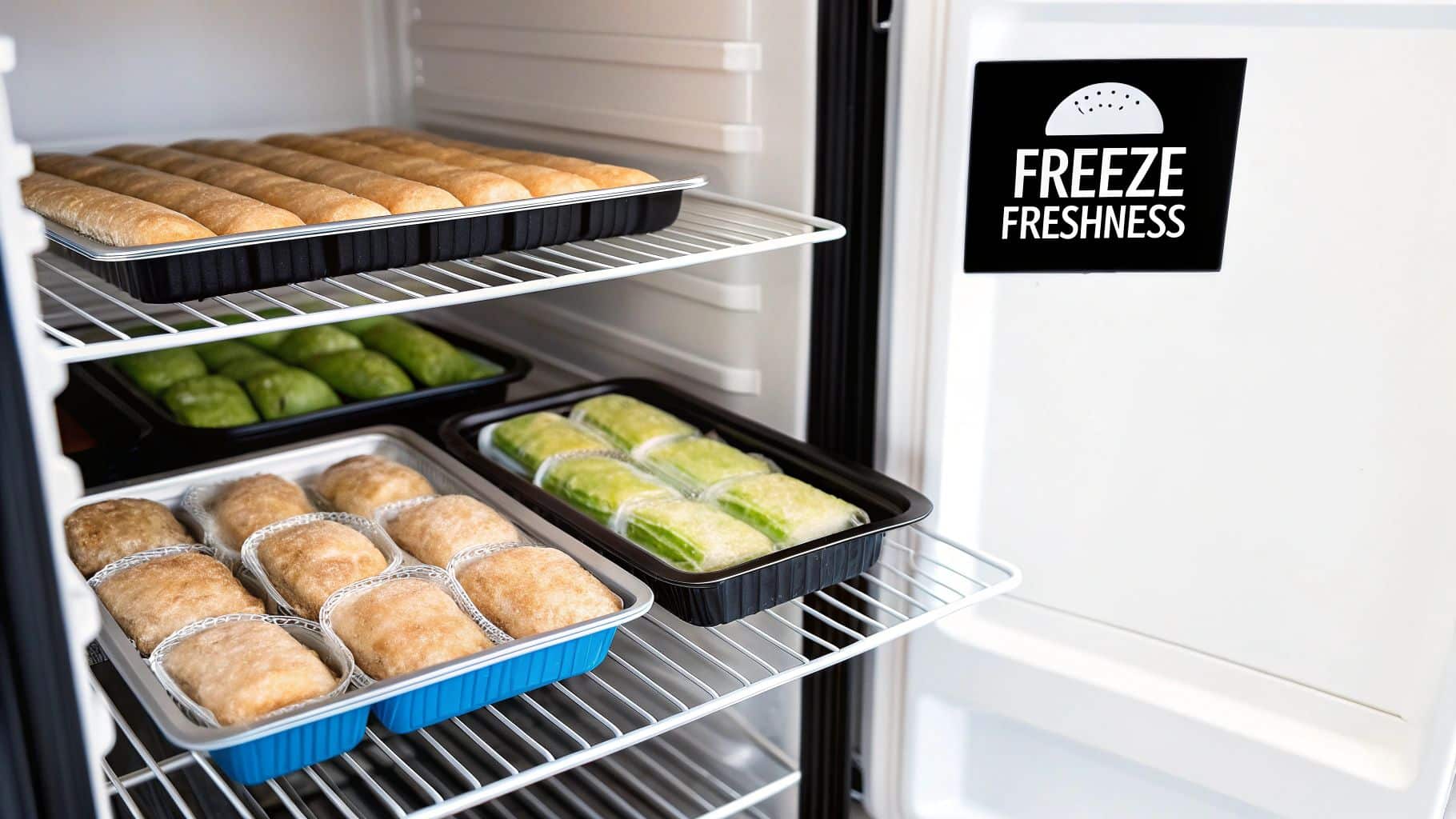
Yes. Most pastries without dairy-based fillings freeze well for about 3 months, including croissants, danishes without cream cheese, puff pastry, scones, muffins and fruit turnovers. Freezing is also the best option for anything you need to hold longer than a few days, since it slows staling far more than refrigeration.
Pastries with custard, pastry cream or whipped cream do not freeze well once filled. The fillings can separate and turn watery. Freeze unfilled shells, such as choux or tart shells, and fill them after thawing.
How to Freeze Pastries
- Cool pastries completely.
- Flash freeze them in a single layer on a sheet tray until firm, so they do not stick together or lose their shape.
- Wrap each one tightly in plastic wrap. Add a layer of foil for extra protection against freezer burn and odors.
- Place wrapped pastries in a freezer bag or airtight container and press out excess air.
- Label with the item and date so you can rotate stock.
How to Thaw and Re-Crisp Frozen Pastries
For plain pastries, thaw at room temperature in their wrapping. Any condensation forms on the wrap instead of the pastry. Then unwrap and reheat in a 350°F oven for a few minutes to restore crispness, a method Taste of Home recommends for cream puff shells that works well for most flaky pastries. Croissants and turnovers can also go directly from freezer to oven; just allow a little more time.
Thaw anything with cheese or other perishable components in the refrigerator, not on the counter.
Storing and Packaging Pastries for Sale or Take-Home
Packaging is part of storage. The container a customer carries home determines how the pastry looks and tastes a few hours later. The right choice depends on the pastry type and how long it will sit in the package.
Pastry Boxes and Bakery Boxes
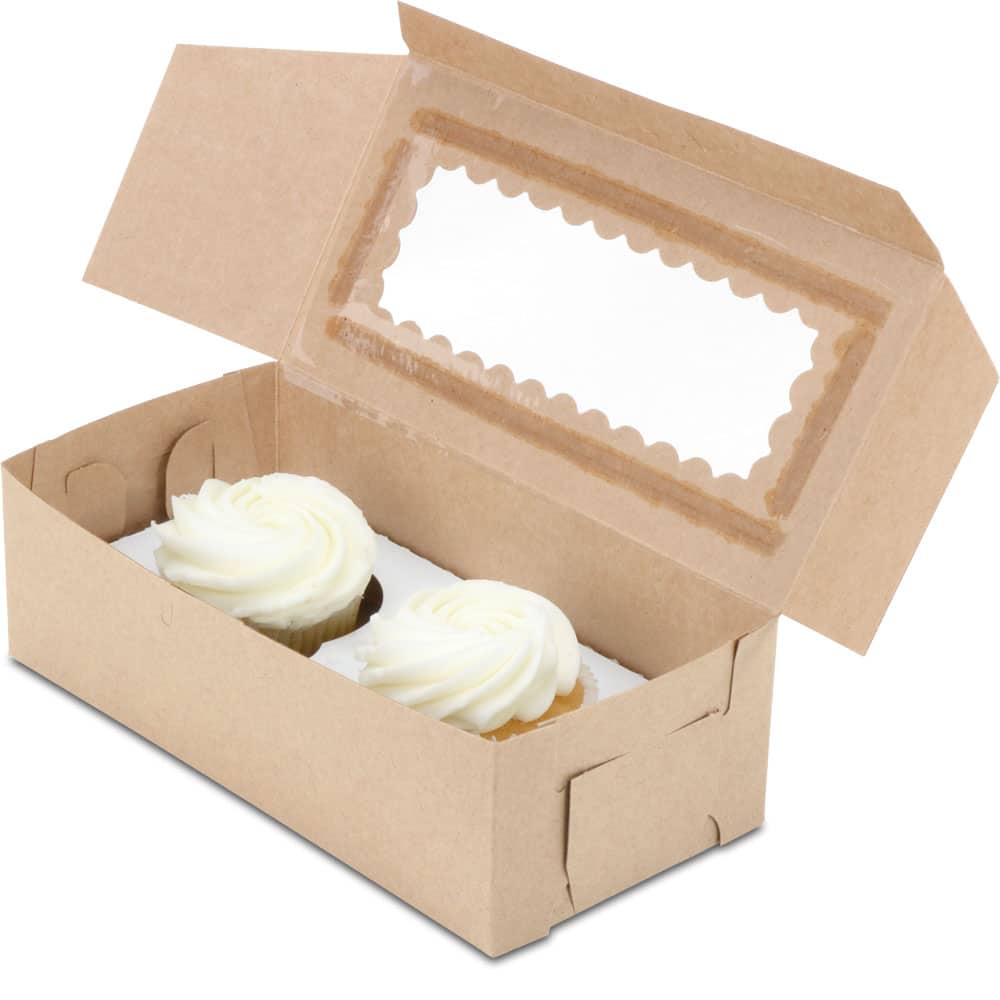
Paperboard bakery boxes protect flaky pastries from crushing and stack neatly for multi-item orders. Windows show off the product on the counter and in the customer’s hands. Our 8 x 5.75 x 2.5″ kraft bakery boxes with window use a semi-automatic pop-up construction for fast assembly during busy mornings and are made from recyclable natural brown kraft. The polypropylene window film must be removed for full compostability.
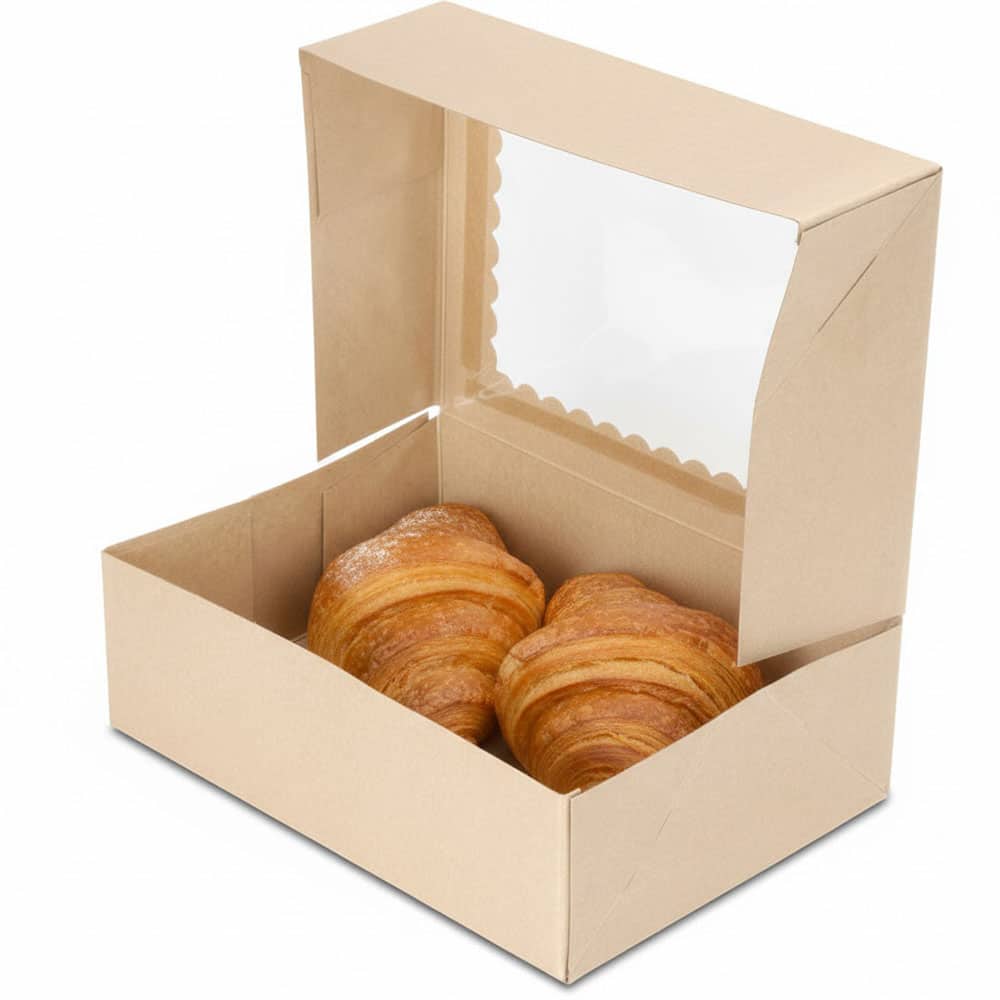
Size the box to the order. A box that is too large lets pastries slide and collide, which breaks laminated layers and smears glazes.
Grease-Resistant Bakery Bags
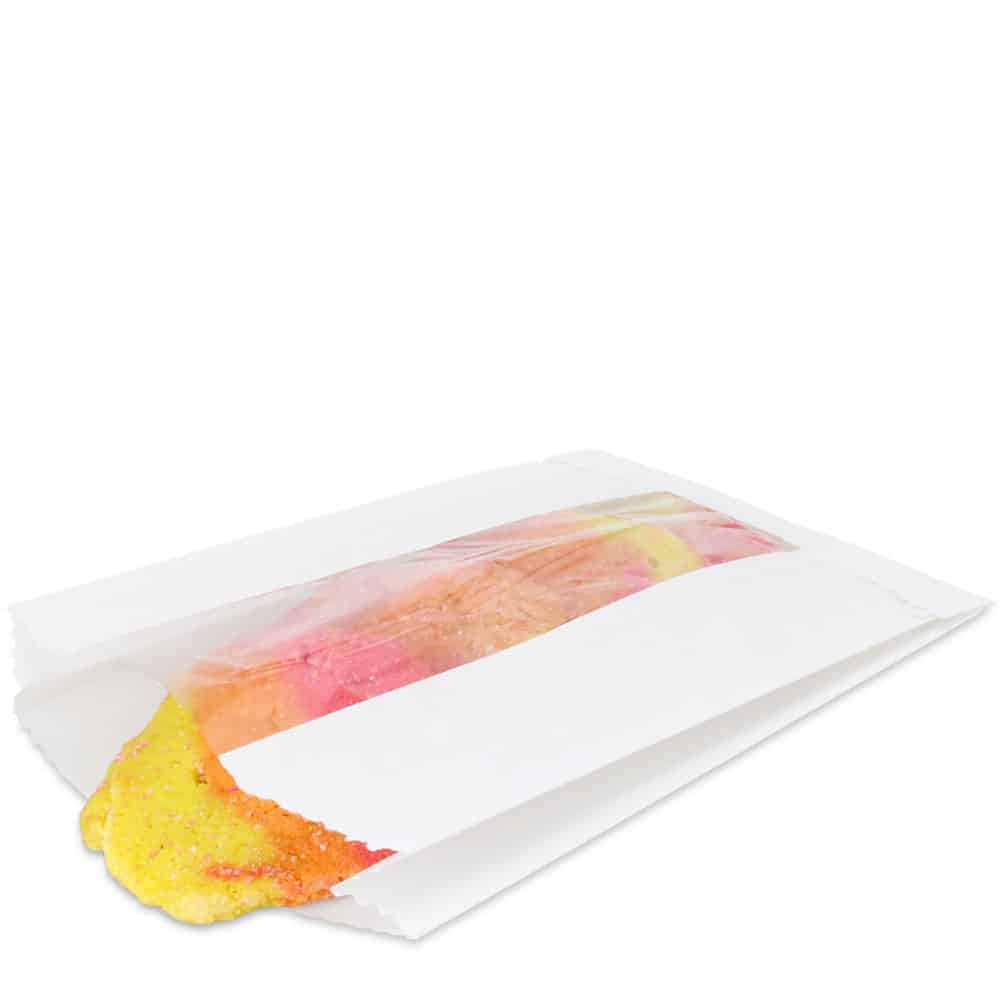
Paper bags are the quickest option for one or two croissants, danishes or scones. Butter-rich pastries stain plain paper fast, so choose grease-resistant stock. Our 4 lb. grease resistant kraft bakery bags with window are made from oil and grease resistant unbleached kraft with an oversized window, and the flat bottom lets the bag stand on its own for easy filling. Browse the full range of window bakery bags for other sizes.

For single slim items like biscotti, cookies or a single scone, narrow cookie bags with a window panel work well at the register.
Clear Clamshells for Filled and Delicate Pastries
Cream-filled pastries, fruit tarts and éclairs need rigid protection and a closed lid. Clear clamshell containers keep fillings intact, show the product in grab-and-go cases, and suit refrigerated display. Because they hold moisture in, they are a better fit for chilled items than for crisp laminated pastries. Macarons are fragile and benefit from fitted inserts, so dedicated macaron boxes keep shells from cracking.
Why Airflow Matters for Laminated Doughs
Croissants, danishes and puff pastry give off steam and fat as they cool. Sealed plastic traps that moisture against the crust, and within hours the layers turn soft. Paper bags and paperboard boxes let some moisture escape, so these pastries stay flakier on the way home. Pack laminated items only after they have cooled, and save airtight packaging for cream-filled items that need refrigeration.
A small storage card or sticker helps customers too: “Best within 1 to 3 days. Refrigerate cream-filled items.” For more presentation ideas, see our roundup of bakery packaging ideas.
Signs a Pastry Has Gone Bad
Stale and spoiled are different. A stale pastry is dry or firm but still safe, and a few minutes in a 350°F oven usually revives it. Discard a pastry if you notice any of the following:
- Visible mold, even a small spot (fillings and soft crumb can carry mold you cannot see)
- A sour, fermented or otherwise off smell
- Slimy or sticky surfaces, or fillings that look separated or watery
- Cream, custard or cream cheese pastries left out longer than 2 hours (1 hour above 90°F), regardless of how they look
When in doubt, throw it out. For a business, that also means setting clear discard times for display items and logging when cream-filled products come out of refrigeration.
Frequently Asked Questions
How long can pastries sit out?
Plain pastries like croissants, scones and fruit turnovers can sit out at room temperature and are best within 1 to 3 days. Pastries with cream, custard or cream cheese should not sit out more than 2 hours, or 1 hour when it is above 90°F. After that, they need to be refrigerated or discarded.
What is the best way to store pastries overnight?
Cool them fully, then keep them on the counter in a paper bag or covered bakery box. Avoid the fridge for plain pastries, since refrigeration speeds up staling. Warm them in a 350°F oven for a few minutes the next morning to bring back the crisp texture.
How do you store danish pastries?
Fruit or plain danishes keep at room temperature, covered, for 1 to 3 days. Cream cheese or custard danishes must be refrigerated within 2 hours. Both types without perishable fillings freeze well for about 3 months.
How do you store chocolate croissants?
Store chocolate croissants the same way as plain croissants: at room temperature in a paper bag or box for 1 to 3 days. The chocolate does not need refrigeration. For longer storage, wrap them tightly and freeze, then reheat at 350°F.
Should pastries be stored in airtight containers?
It depends on the pastry. Flaky laminated pastries stay crisper in paper or a loosely covered box, because airtight plastic traps moisture and softens the layers. Muffins, scones and refrigerated cream-filled pastries do better in a closed container that protects them from drying and absorbing odors.
Choosing the Right Storage and Packaging
Knowing how to store pastries comes down to three rules: room temperature for plain and fruit pastries, the fridge within 2 hours for anything with cream or custard, and the freezer for anything you need to hold longer. When those pastries leave your counter, packaging that matches the pastry type keeps them in good shape until they are eaten. Our selection of bakery boxes covers sizes for single pastries through full dozens.