

What are SOS bags? An SOS bag (self-opening sack) is a flat-folded, square-bottom paper bag with pleated, or gusseted, sides. It snaps open with one flick and stands upright on its own, so you can fill it with both hands free. Sizes are named by pound capacity (2#, 4#, 8#, and so on). Restaurants, bakeries, delis, grocers, and retailers use them every day.
If you have been reading supplier catalogs and wondering what “8# SOS” means, this guide covers the meaning of the name, how the bag is built, where it came from, how the sizes work, and which type suits the food you sell.
What Are SOS Bags? The Meaning and Full Form of SOS
The SOS bag full form is self-opening sack. It has nothing to do with the distress signal. In catalogs you will see it written as SOS, S.O.S., or sometimes misspelled as “soss bag” or “sosbag.” All of these refer to the same thing: a gusseted paper bag with a flat, rectangular bottom.
You will also hear SOS bags called lunch bags, lunch sacks, grocery sacks, or bakery bags, depending on the size and the industry. The construction stays the same.
Why It’s Called “Self-Opening”
Older paper bags had V-shaped or envelope-style bottoms. You had to pry them open and hold them while filling. An SOS bag opens in one motion: grab the top edge, flick your wrist, and air fills the bag while the bottom pops into a flat rectangle. The bag then stands on the counter by itself. For a busy line cook or cashier, that means faster bagging with fewer dropped orders.
How an SOS Bag Works
Four details make the format practical for food service and retail.
- Square bottom. The base folds into a flat rectangle when opened, which lets the bag stand upright and keeps contents level, so a sandwich or box of pastries sits flat instead of tipping into a point.
- Gusseted sides. The pleated side panels let the bag expand when open and collapse flat when stored. A case of 500 bags takes up little shelf space.
- Serrated top. The saw-tooth edge along the opening makes the bag easier to grab and open. The small teeth flex slightly, which helps separate layers of paper that would otherwise cling together, and a serrated edge is less sharp to the touch than a straight cut.
- Thumb notch. Many SOS bags have a half-moon cutout on one face near the top. It gives your thumb a spot to catch a single bag from the stack and open it quickly.

Once filled, the top can be folded down once or twice and stapled, taped, or closed with a sticker. If you deliver through third-party apps in California, note that California AB 3336 requires food facilities to close bags of ready-to-eat food with a tamper-evident method before the driver takes the order. The law does not prescribe a specific method, so a sealed sticker across the folded top of an SOS bag is one common approach.
A Short History: Charles Stilwell and the Square-Bottom Bag
Paper bags existed before the SOS. According to the history of the paper bag, Francis Wolle built a machine in 1852 that mass-produced envelope-style bags, and Margaret E. Knight designed a machine for flat-bottom bags in 1871.
Charles Stilwell of Fremont, Ohio, took the next step. Ohio History Central describes him as a Union Civil War veteran who became a mechanical engineer and spent his spare time improving the paper bag. On June 12, 1883, he received a patent for a bag-making machine that produced square-bottom bags with pleated sides. Those bags could stand open on their own and fold flat for storage, and they became known as the S.O.S., or self-opening sack.

Later, in 1912, Walter Deubener added cord handles to paper bags, an idea that eventually led to the handled shopping bags common today. The basic SOS design Stilwell patented is still the standard for lunch sacks and grocery bags more than 140 years later.
SOS Bag Sizes Explained (Why Bags Are Sized by the Pound)
SOS bags are named by the pound mark, written as #. A 4# bag is a “4-pound” bag. The convention dates back to general stores, where grocers scooped dry goods like flour and sugar into paper bags for customers. A 4# bag held roughly 4 pounds of sugar with enough room left at the top to fold it closed. Some older references even described bag capacity in fractions of a barrel of flour.
Today the number is a size name, not a weight rating for your food. A 4# bag describes a set of dimensions, not a promise to carry exactly 4 pounds of fries.

Here are the common smaller SOS bag sizes, with dimensions taken from the bags we carry:
| Size | Dimensions (W x D x H) | Typical uses |
|---|---|---|
| 2# | 4.125 x 2.5 x 7.875 in. | Single cookies, small fries, candy, condiment and napkin packs |
| 4# | 5 x 3.125 x 9.625 in. | Donuts, bagels, muffins, chips, small snack orders |
| 6# | 6 x 3.625 x 11 in. | Wrapped sandwiches, pastries, retail items, small gift orders |
| 8# | 6.25 x 3.8125 x 12.5 in. | Packed lunches, sandwich and side combos, larger bakery orders |
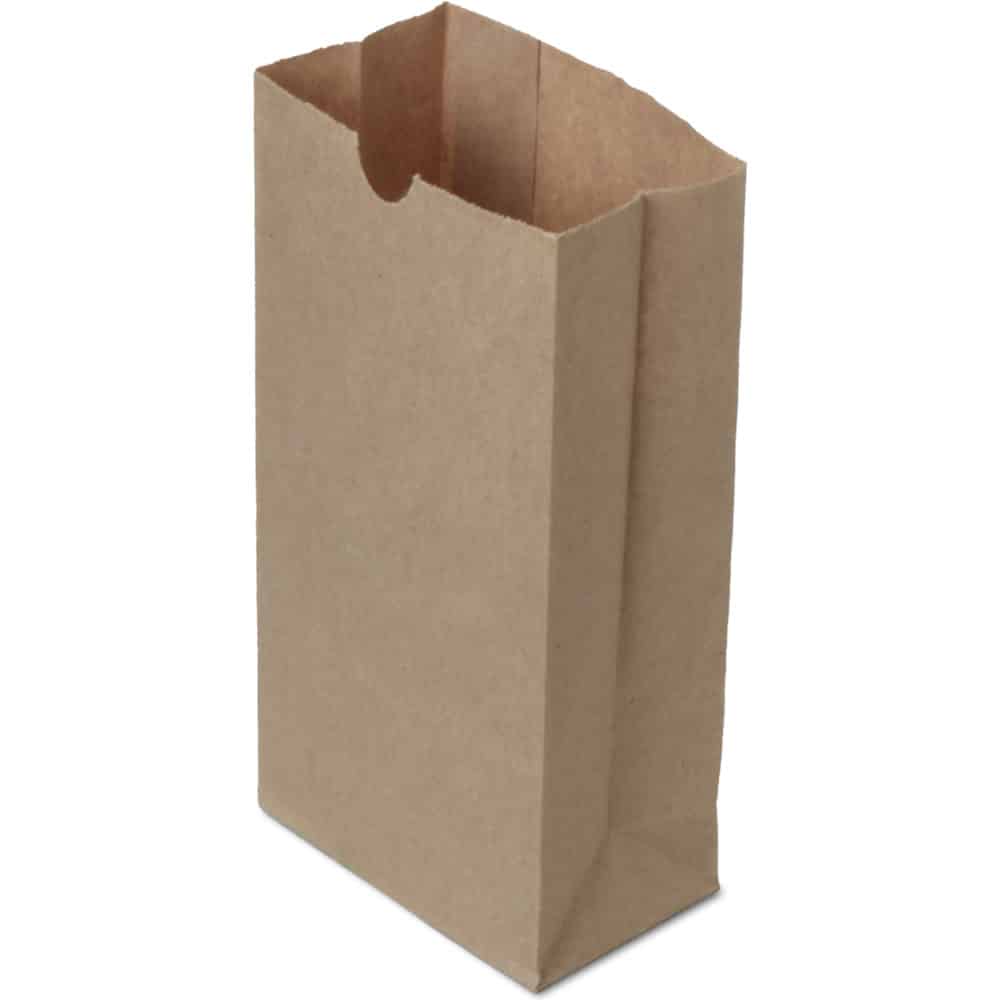
Larger SOS sizes (such as 12#, 16#, 20#, and 25#) are used for multi-item takeout and grocery orders. Check the category listing for current dimensions before ordering.
A note on paper weight: the # symbol also shows up in paper specs, which can be confusing. “35# basis weight” describes how heavy the paper stock is, not the bag size. The 2#, 4#, 6#, and 8# bags in the table above are all made from 35# basis weight paper with a machine glazed (MG) finish. In many bag lines, the larger sizes move to heavier paper so they can carry more weight, so check the basis weight on each product page when you size up.
Types of SOS Bags
The square-bottom, self-opening design comes in several versions. Here is how they compare:
| Type | Material / feature | Best for |
|---|---|---|
| Natural brown kraft | Unbleached kraft paper, often with recycled content | Everyday takeout, lunches, grocery, rustic branding |
| White | White kraft paper with a clean, bright surface | Bakeries, cafés, boutiques, logo printing |
| Colored / black | Dyed paper in black and other colors | Brand color matching, gift shops, color-coding sizes or orders |
| Grease-resistant | Treated paper that slows oil from soaking through | Donuts, fries, tortilla chips, fried snacks |
| Double wax | Wax treatment on the paper | Lunches, bakery items, snacks that need extra moisture and grease resistance |
| Window bakery / candy | Clear film window on the front panel | Cookies, candy, popcorn, point-of-purchase display |
| Hardware | Heavier paper in small sizes | Nails, screws, small parts, dense retail items |
| Poly-lined snack sacks | Paper with a thin plastic lining | Tots, nuggets, onion rings, breakfast sandwiches, small burgers |

Grease resistance comes from how the paper is made or treated, not from the bag shape. For a closer look at the materials, see our guide on how grease-resistant paper works.
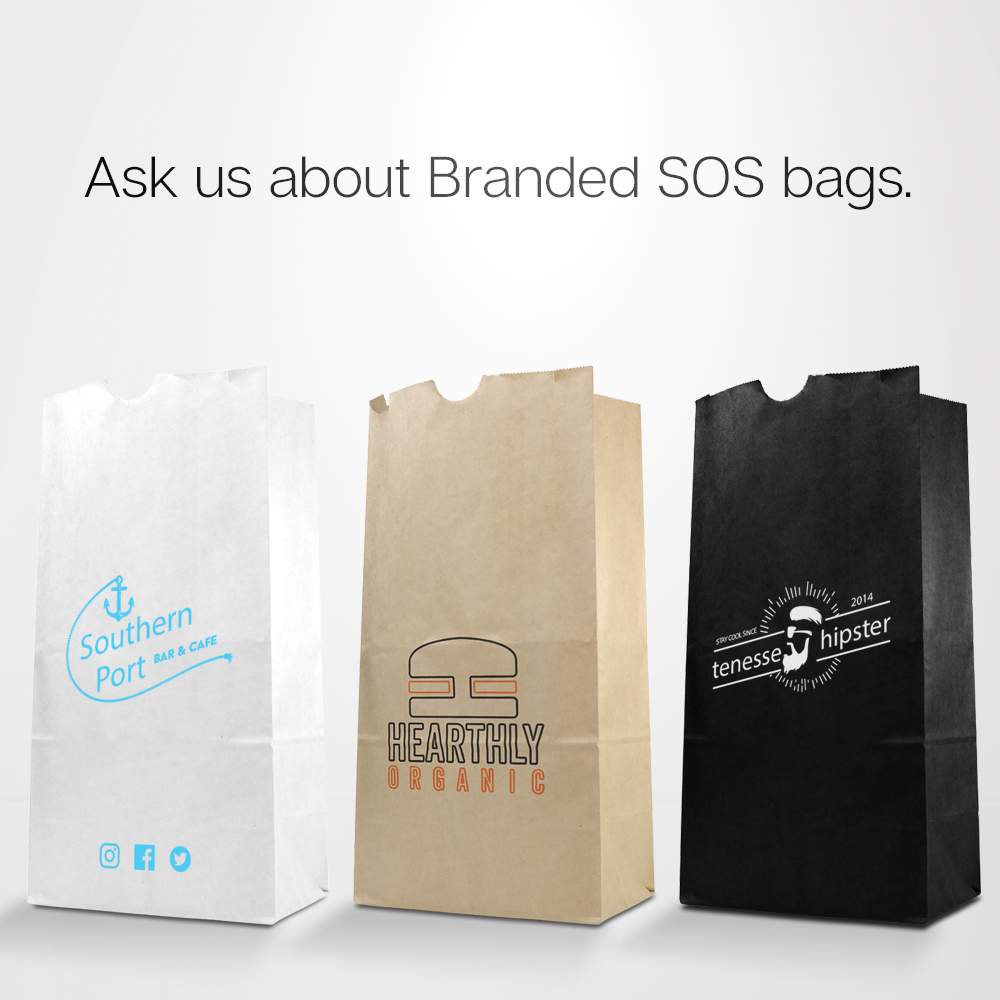
Colored bags like our 6lb. black SOS bags share the same square-bottom design and 35# MG paper as the kraft and white versions, so you can switch colors without changing how your staff bags orders.
White vs. Kraft SOS Bags
Brown kraft SOS bags have a natural, rustic look and hide minor scuffs and stains well. Our 2lb. natural brown kraft SOS bags are made from 100% recycled paper, as are the 8lb. kraft bags.

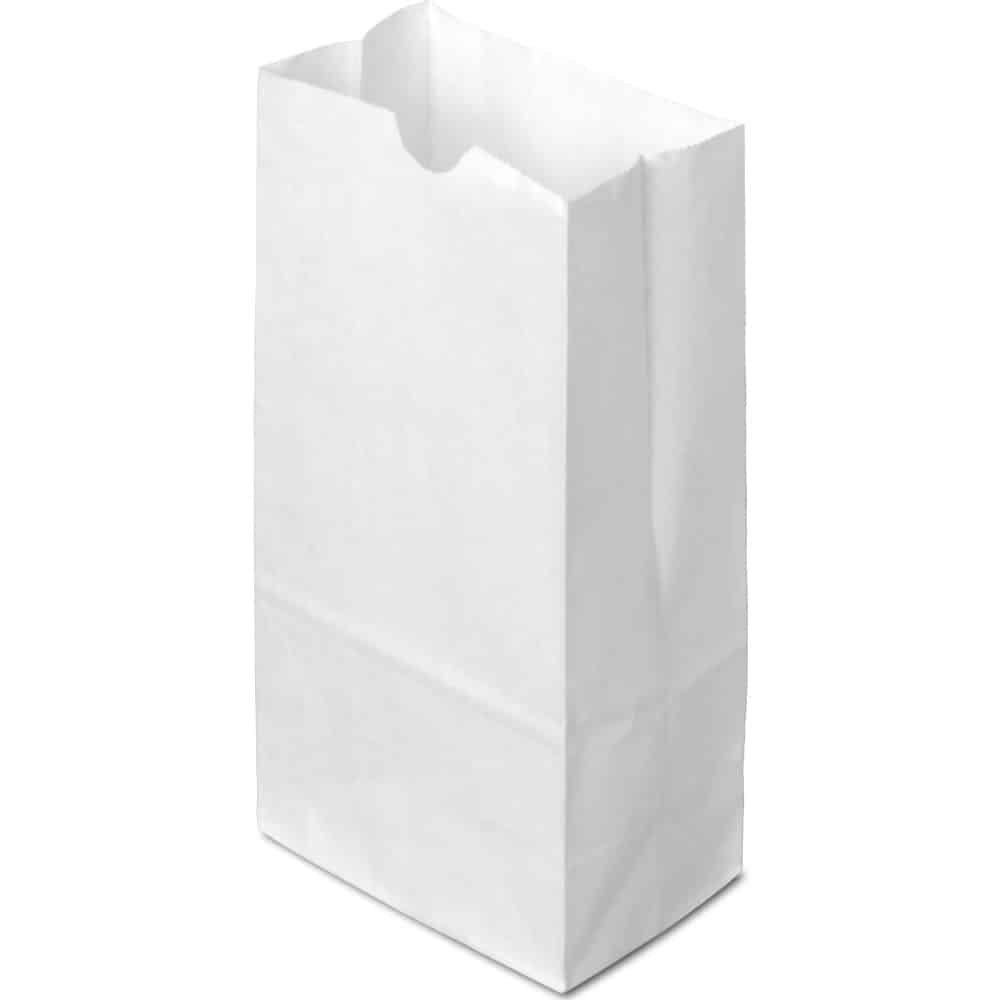
White SOS bags give a cleaner, brighter presentation that suits bakeries and cafés, and logos show up with strong contrast. Both finishes in our line are machine glazed, which makes the surface ready for custom printing or stamping.
SOS Bags vs. Other Paper Bags
SOS bags are one of several paper bag formats. Knowing the differences helps you order the right one.
- Flat and pinch-bottom merchandise bags. These have no gussets and no square bottom. They lie flat and are used for greeting cards, single pastries, or small retail items. Some buyers search for an “SOS pouch,” but a flat pouch-style bag is a different product. A true SOS bag always opens into a standing, square-bottom shape.
- Handled shopping bags. These use the same square-bottom idea but add twisted or flat paper handles for carrying heavier or bulkier orders. For larger takeout or retail purchases, consider kraft paper shopping bags with handles.
- Bread bags. Bread bags are taller and narrower to fit loaves and baguettes, often with a window to show the crust. Bakeries usually stock window bread bags alongside SOS bags for pastries and rolls.
You can compare all of these formats in our full range of paper bags for bread, bakery, and takeout.
How to Choose the Right SOS Bag for Your Business
Start with the food, then pick the size and paper type.
- Fries, donuts, and fried snacks: grease-resistant or poly-lined SOS bags in 2# to 4# sizes. For a wider selection, browse our grease-resistant fried food packaging.
- Sandwiches and lunches: 6# for a single wrapped sandwich, 8# for a sandwich plus chips, a cookie, and a napkin. Double wax bags add moisture resistance for packed lunches.
- Bakery display: window SOS bags let customers see cookies and pastries at the counter. White bags work well for a clean case presentation.
- Grocery and to-go orders: larger SOS sizes or handled bags for multi-item orders. Our guide to choosing restaurant takeout bags covers capacity and carry options in more detail.
- Hardware and retail: hardware-style SOS bags for small, dense items, and colored or white bags for boutiques and gift shops.

Keep in mind that a paper bag does not keep food hot or cold for long. Food safety guidance says perishable food should not sit out more than 2 hours, or 1 hour above 90°F, so tell customers to refrigerate leftovers promptly.
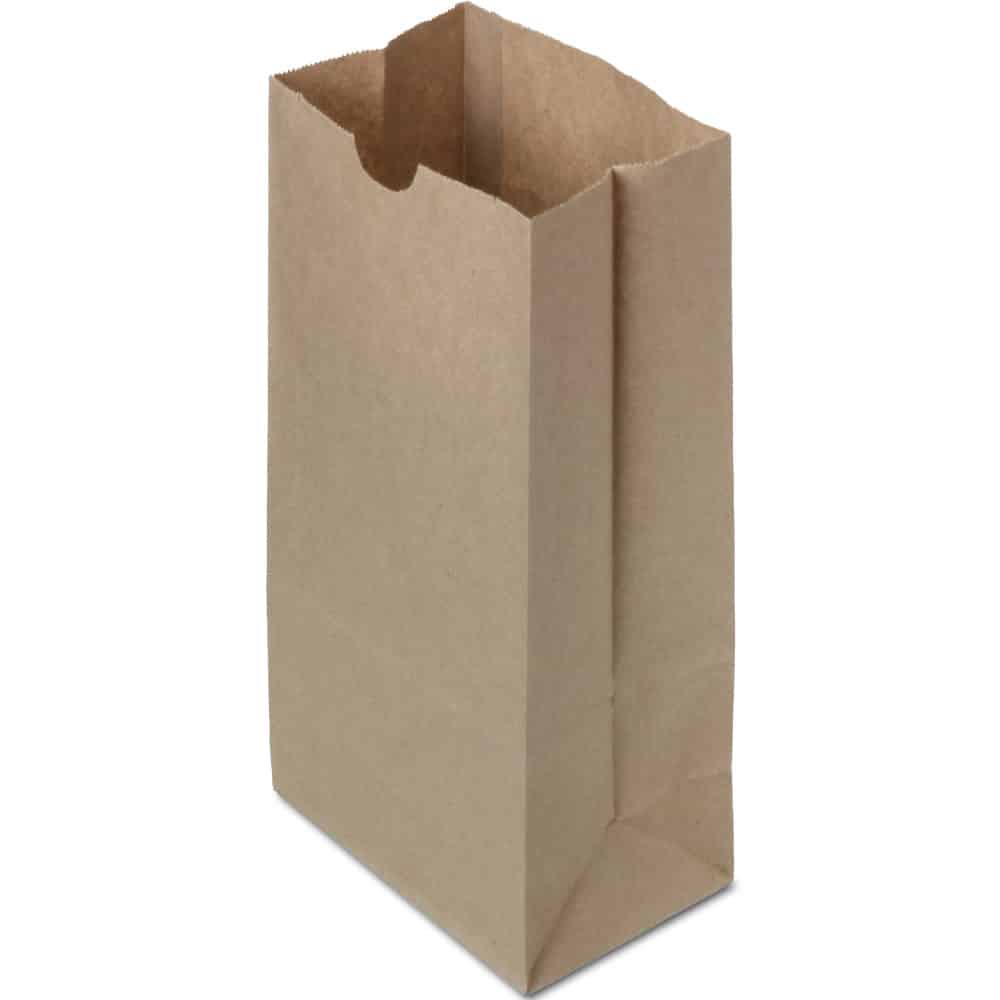
Branding is easy on SOS bags. A one-color logo stamp on a kraft or white bag turns a plain lunch sack into a takeaway reminder of your shop, and we can help with both simple stamped designs and full-color printing.

Are SOS Bags Recyclable or Compostable?
Plain paper SOS bags are generally easier to recycle than plastic, but acceptance depends on your local program. A few points to share with customers:
- Kraft vs. white: both are paper. Some of our kraft bags, including the 2lb. and 8lb. sizes, are made from 100% recycled paper. Bags heavily soiled with grease or food may not be accepted, so customers should check local guidelines.
- Window bags: the clear film is a different material from the paper. Many programs ask that the window be removed first. Check local guidelines.
- Wax and poly-lined bags: coatings and linings can affect whether a bag is accepted for recycling. Check local guidelines.
- Compostable claims: a bag should only be called compostable if it carries certification. BPI certifies products against ASTM D6400 and ASTM D6868, which require at least 90% disintegration within 12 weeks under industrial composting conditions. Only items with BPI’s separate Home Compostability certification are designed for backyard bins.
On grease resistance, the FDA announced in February 2024 that grease-proofing substances containing PFAS are no longer being sold by manufacturers for food contact use in the U.S., following a voluntary market phase-out. If PFAS status matters for your menu or local rules, ask for supplier documentation on the specific bag. For a broader material comparison, see our paper vs. plastic bags breakdown.
Frequently Asked Questions
What is an SOS bag?
An SOS bag is a self-opening sack: a paper bag with a square bottom and pleated sides. It opens with a single flick and stands upright on its own for easy filling. Food businesses use them for lunches, bakery items, snacks, and takeout.
What does SOS mean on a paper bag (SOS bag full form)?
SOS stands for self-opening sack. The name describes how the bag pops open into a standing, square-bottom shape without needing to be held. It is not related to the distress signal.
What are standard SOS bag sizes?
Common small sizes are 2#, 4#, 6#, and 8#. For example, a 2# bag measures 4.125 x 2.5 x 7.875 in., and an 8# bag measures 6.25 x 3.8125 x 12.5 in. Larger sizes are available for grocery and multi-item orders.
What does the # mean in SOS bag sizes (e.g., 8# SOS bag)?
The # is the pound symbol. Bag sizes trace back to grocers filling bags with dry goods, so an 8# bag held about 8 pounds of sugar or flour. Today it is a size name tied to set dimensions, separate from the paper’s basis weight.
Who invented the SOS bag?
Charles Stilwell of Fremont, Ohio, patented a machine in 1883 that made square-bottom paper bags with pleated sides that could stand open. These became known as S.O.S. bags. Margaret E. Knight’s flat-bottom bag machine came earlier, in 1871.
Are white SOS bags recyclable?
White SOS bags are paper, so many recycling programs accept them when they are clean and dry. Bags with heavy grease, wax coatings, plastic linings, or film windows may be handled differently. Check your local recycling guidelines.
SOS bags have stayed a counter staple for over a century because they open fast, stand on their own, and come in sizes that match how food is actually sold. To compare kraft, white, colored, and specialty options side by side, browse our wholesale SOS bags.


Comments are closed.