
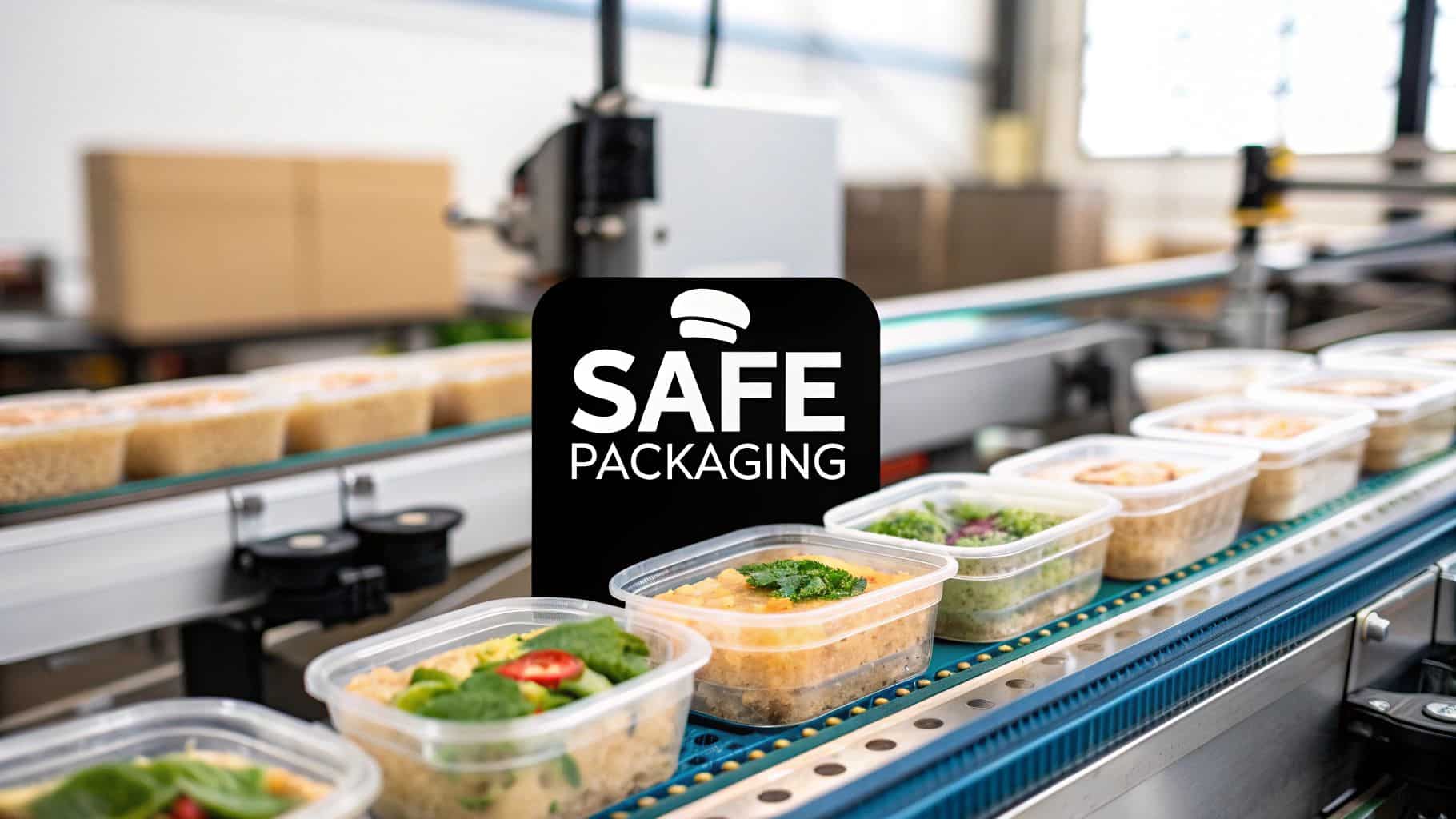
Food safe packaging is made from materials approved for direct food contact that won’t transfer harmful chemicals, odors or tastes to the food inside. It protects food from contamination, moisture and handling damage from kitchen to customer. Before you reorder, run each item through this quick check:
- Made for direct food contact, with documentation from the supplier
- Matched to the food’s temperature, grease and moisture level
- Closes securely and holds up in transit without leaking
- Stored clean, dry and away from chemicals until it is used
What Does Food Safe Mean for Packaging?
“Food safe” means a material can touch food under its intended conditions of use without making that food unsafe. The words “intended conditions” matter. A clear container that works for chilled pasta salad may warp when filled with hot chili. Safety depends on the material, the food, and how long and how hot the two will be together.
Food Safe vs Food Grade vs Food Contact Approved
These terms are often used interchangeably, but they describe different things:
- Food grade describes the raw material. Food grade packaging is made from resins, papers, inks or coatings that are suitable to contact food.
- Food safe describes the finished item in use. A food grade material is only food safe when it is used within its limits for temperature, fat content and contact time.
- Food contact approved or compliant is supplier language meaning the materials meet applicable food contact rules. Ask what the claim is based on and whether a compliance letter or spec sheet backs it up.
Who Oversees Food Contact Materials?
In the U.S., the FDA oversees the substances used in materials that touch food. It does not test or certify individual cups, bags or boxes. For a buyer, the practical proof is the manufacturer’s documentation: compliance letters, spec sheets and stated use limits. For a fuller walkthrough of the rules, see our overview of food packaging regulations.
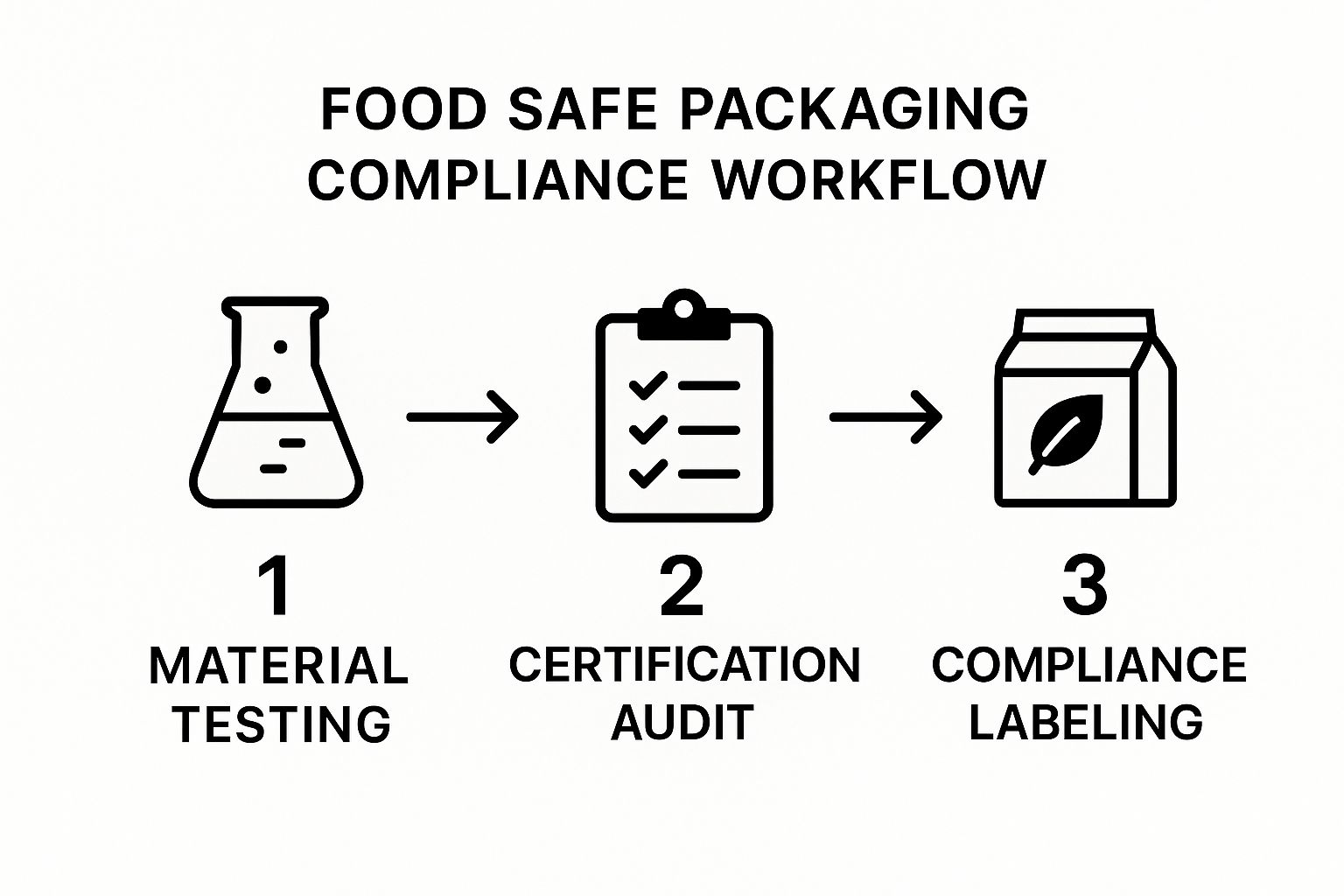
Many manufacturers follow a similar path before a product reaches you: testing the material, auditing how and where it is made, and labeling it with its approved uses. Your part is to read that labeling and follow it in your kitchen.
Key Properties of Food Safe Packaging
Whatever the material, packaging that protects food well shares four traits.
Non-Reactive
The packaging should not interact chemically with the food. Acids in tomato sauce or citrus dressing and fats in fried food can draw substances out of the wrong material. A non-reactive container keeps flavors clean and prevents unwanted compounds from migrating into the food. This applies to inks, adhesives and coatings too, not only the base material.
Barrier Protection
Good packaging keeps the outside out: dust, moisture, airborne contaminants, odors from other foods and hands that should not touch your product. Depending on the food, it may also need to hold moisture in (bread, cut fruit) or let steam escape (fries, fried chicken) so the food does not turn soggy.
Durability and Leak Resistance
A container that cracks, tears or leaks is no longer protecting anything. Check wall thickness, rim strength and how the item handles weight, stacking and the bumps of a delivery bag. Soups, sauces and dressings need tight-fitting lids. Heavy entrées need a base that will not flex.
Secure Closures
Lids, folds, seals and fasteners keep food contained and make it obvious when a package has been opened. Snap lids should click fully around the rim, and bags should fold or seal cleanly. For delivery, a label across the opening adds a visible layer of protection.
Food Safe Packaging Materials Compared
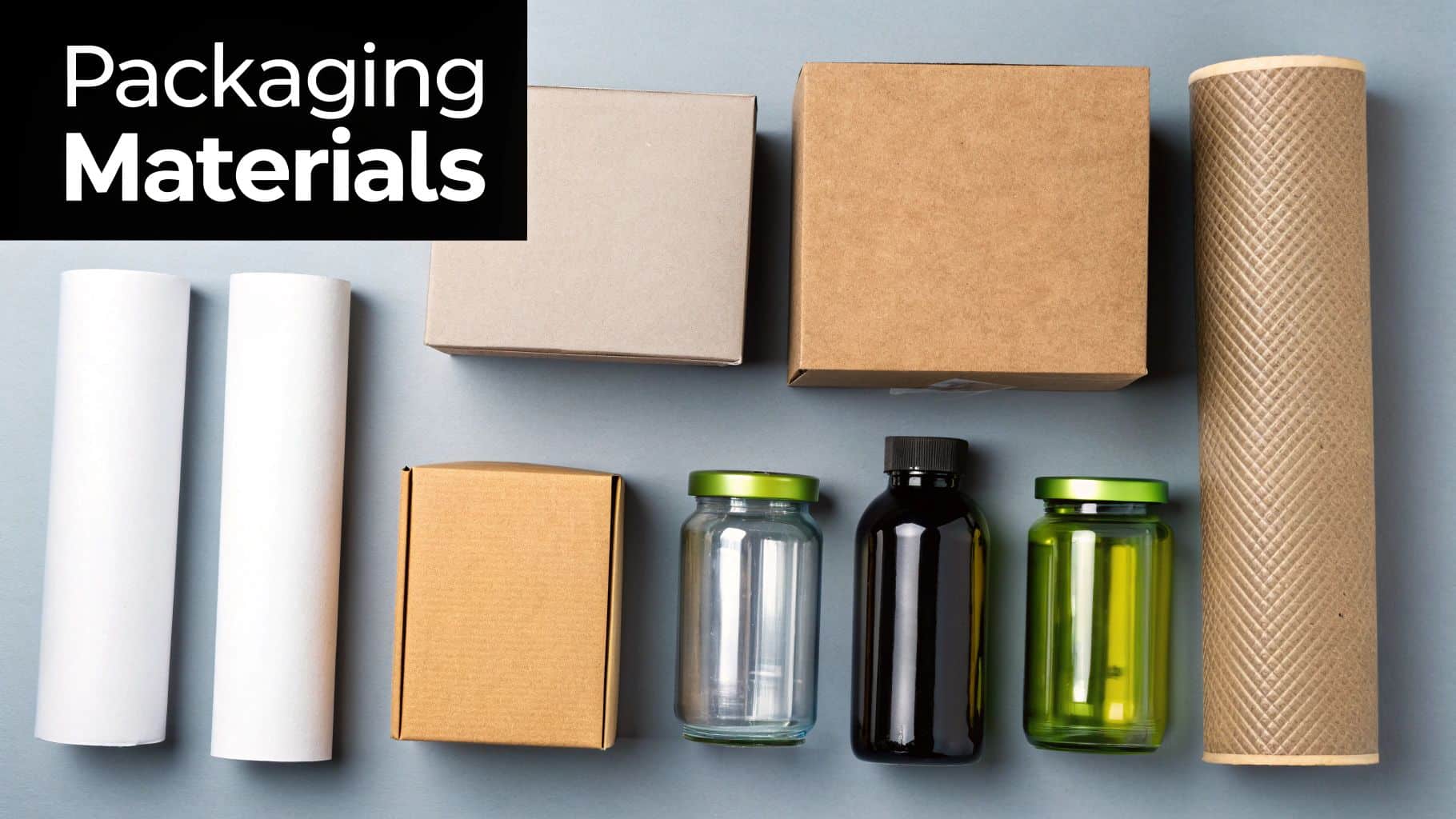
No single material does everything. Here is how the most common foodservice materials compare.
| Material | Best for | Heat/grease tolerance | Watch-outs | Example |
|---|---|---|---|---|
| Coated paper and paperboard | Takeout boxes, hot cups, bakery boxes, fry cartons | Good for short hot holds; grease resistance depends on the coating | Can soften with long wet holds; ask whether the coating is PFAS-free | Paperboard takeout and bakery boxes |
| PFAS-free kraft paper | Sandwiches, pastries, cookies, dry snacks | Handles warm food; grease resistant grades resist oil spotting | Not for liquids; plain kraft will show grease | 320312 kraft sandwich bag |
| Molded fiber and sugarcane (bagasse) | Hot entrées, fried food, plated meals | Generally handles hot and oily food | Can soften under very wet foods held a long time; verify certification before making compost claims | XFSES-B08 sugarcane clamshell |
| PLA (plant-based plastic) | Salads, cut fruit, cold deli sides | Cold food only | Deforms with heat; compostable only where industrial composting accepts it | PLA-DR12 deli container |
| PP plastic (#5) | Soups, hot entrées, reheating | Good heat tolerance; many items are rated for microwaves | Confirm the microwave rating on each item | PP soup and deli containers |
| PET plastic (#1) | Cold drinks, salads, parfaits, display clamshells | Cold use only | Not for hot fill or microwaving; can crack when flexed cold | Clear cold cups and salad containers |
| Aluminum | Catering trays, baked dishes, oven reheating | Oven safe; holds heat well | Not for microwaves; very acidic or salty foods can react with bare foil over long holds | Foil steam table pans |
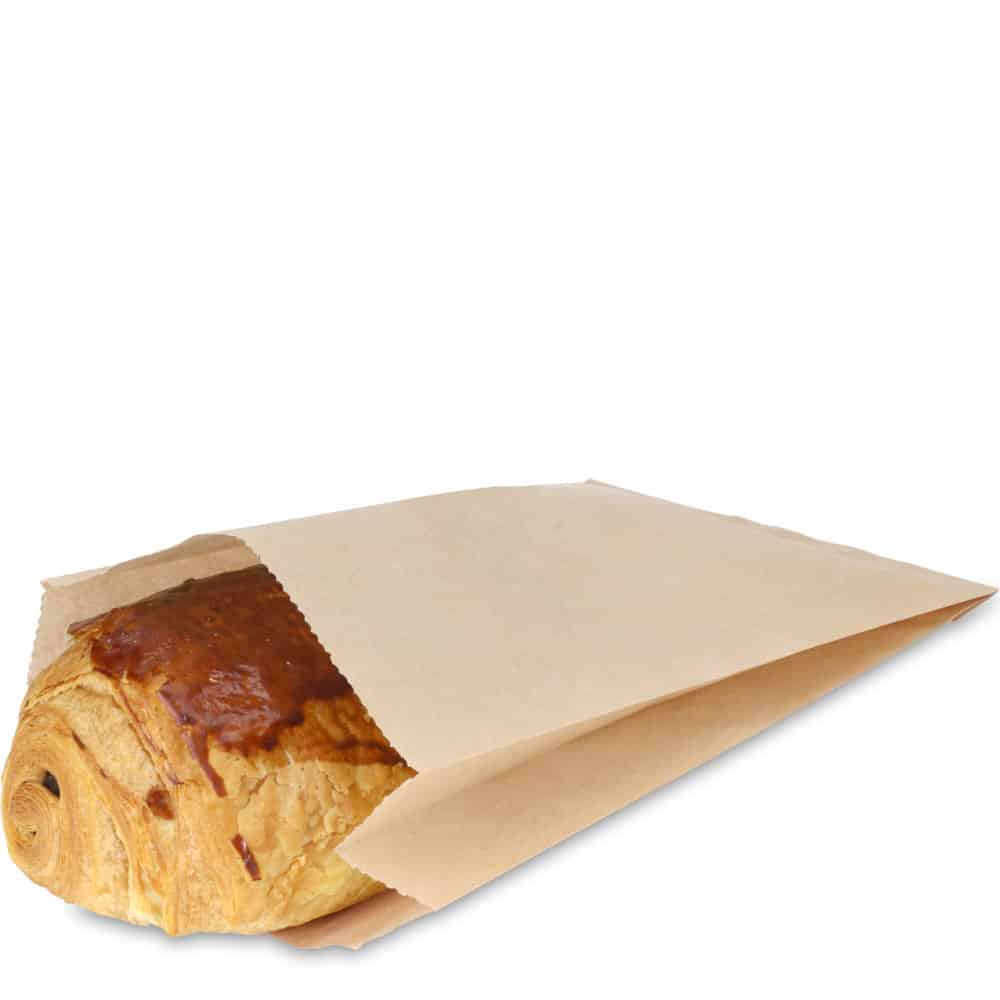
Paper bags remain the simplest option for handheld foods. Our PFAS-free kraft sandwich bag uses grease resistant paper to stop grease from soaking through, and its product page lists it for direct food contact. At 6 x 2 x 9 inches, it fits one sandwich, a pastry or large cookies.
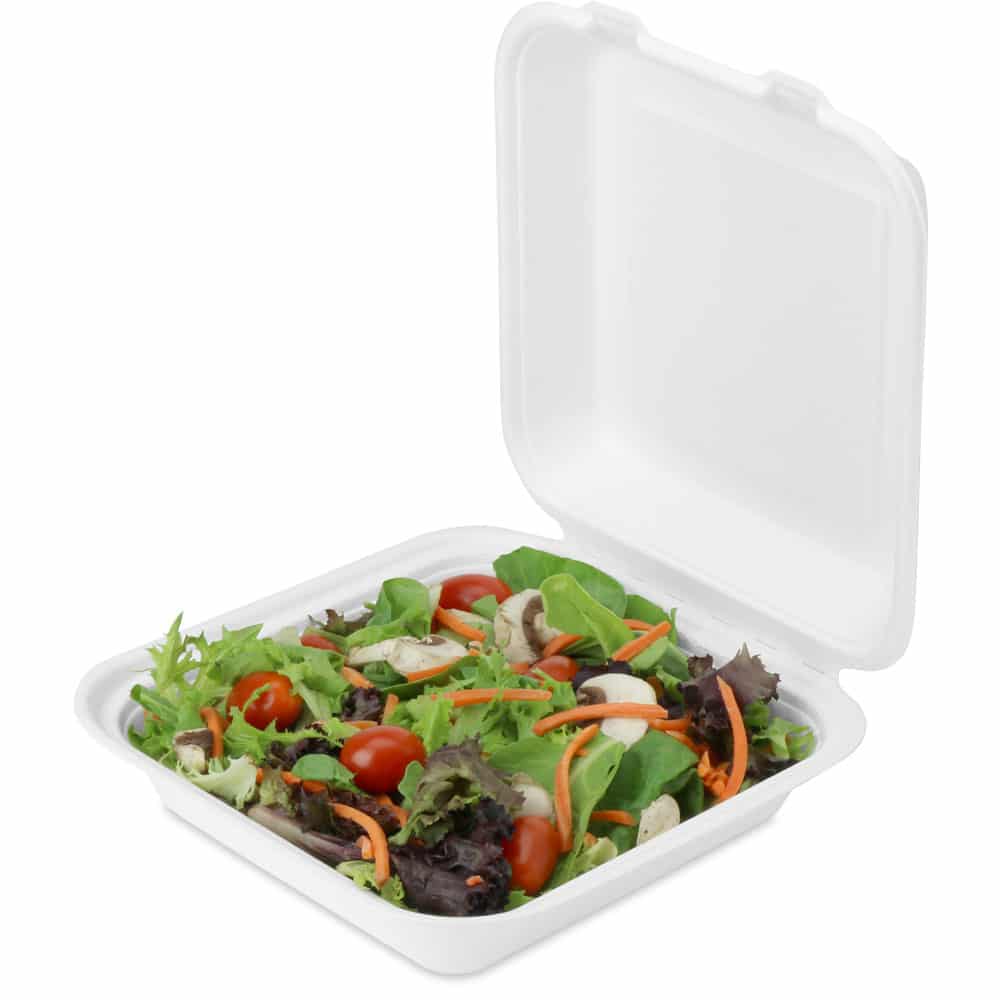
For hot, oily meals, molded sugarcane fiber is a strong plastic-free choice. The XFSES-B08 clamshell is oil and cut resistant, safe for microwave and freezer use, and BPI certified to the ASTM D6400 compostable standard.
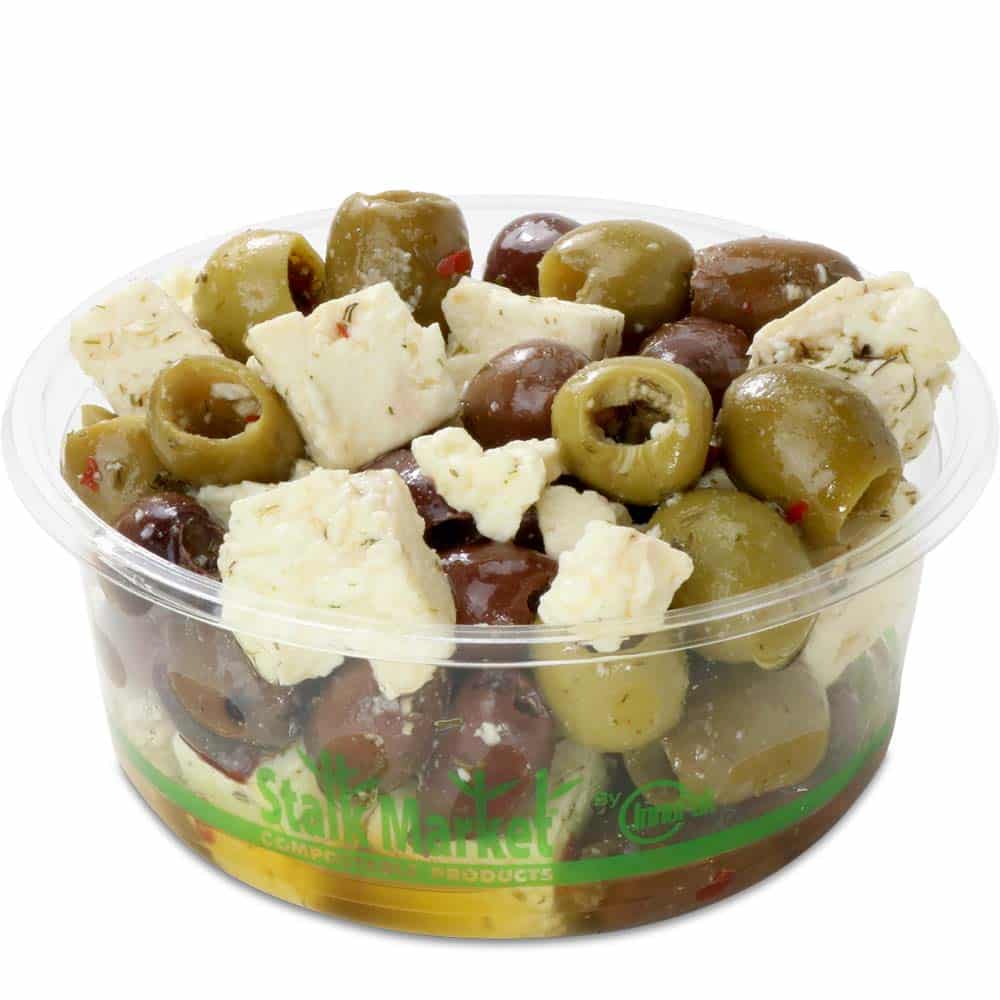
PLA looks and feels like clear plastic but is made without petrochemicals. The 12 oz. PLA deli container is labeled for cold food use only and carries a printed green band with the BPI compostable logo. Lids are sold separately.
How to Choose Safe Packaging for Your Food Business
Safe packaging for the food industry starts with the menu, not the catalog. Sort your items by how they behave in a container, then choose materials that fit those conditions.
| Food type | Risk | Recommended packaging |
|---|---|---|
| Hot and soupy | Leaks, heat warping, temperature loss | PP or paperboard soup containers with tight lids; avoid PET and PLA |
| Greasy and fried | Grease soak-through, soggy food, weakened bags | Grease resistant paper, vented boxes, molded fiber clamshells |
| Cold deli and salads | Warming above safe temperatures, dressing leaks, cross-contact | PET or PLA cold containers with secure lids; separate dressing cups |
| Baked goods | Crushing, drying out, butter spotting | Bakery boxes, window bags, grease resistant pastry and cookie bags |
Hot and Soupy Foods
The FDA Food Code, the model for many state and local retail food rules, calls for holding hot food at 135°F (57°C) or above and cold food at 41°F (5°C) or below. Local codes vary, so confirm the numbers with your health department. Packaging cannot keep food hot forever, but tight lids and insulated carriers slow heat loss. Choose leak resistant soup and deli containers rated for hot fill.
Greasy and Fried Foods
Grease weakens plain paper and makes bags tear at the bottom. Fried foods also release steam, which turns crisp coatings soggy in a sealed box. Use grease resistant packaging for fried foods with vents where possible. To understand the difference between coatings, see how grease resistant paper works.
Cold Deli and Salads
Clear PET or PLA containers show off the food and keep it covered. Pack dressings and sauces in separate cups to prevent leaks and wilting, and keep packed items refrigerated until pickup.
Baked Goods
Pastries and cookies need protection from crushing and from drying out. Bakery boxes work for cakes and assortments, while grease resistant bags handle buttery items like croissants. If you sell baked goods under a cottage food license, check your state’s rules, since many limit or prohibit sales across state lines or by mail.
Protective Food Packaging: Preventing Contamination from Kitchen to Customer
Food on Display
Grab-and-go cases, bakery counters and buffets expose food to customers’ hands, coughs and sneezes. Packaging is one way to protect it. Sneeze guards, covered display cases and lids are others. For prepackaged items, list ingredients clearly, including any of the nine major food allergens: milk, eggs, fish, crustacean shellfish, tree nuts, peanuts, wheat, soybeans and sesame.
Delivery and Catering
Time matters as much as packaging. FoodSafety.gov advises that perishable food should not sit out more than 2 hours, or 1 hour when it is above 90°F. Plan delivery zones and catering drop-offs around that window, bag hot and cold items separately, and use containers that stack without crushing.
Tamper-Evident Packaging
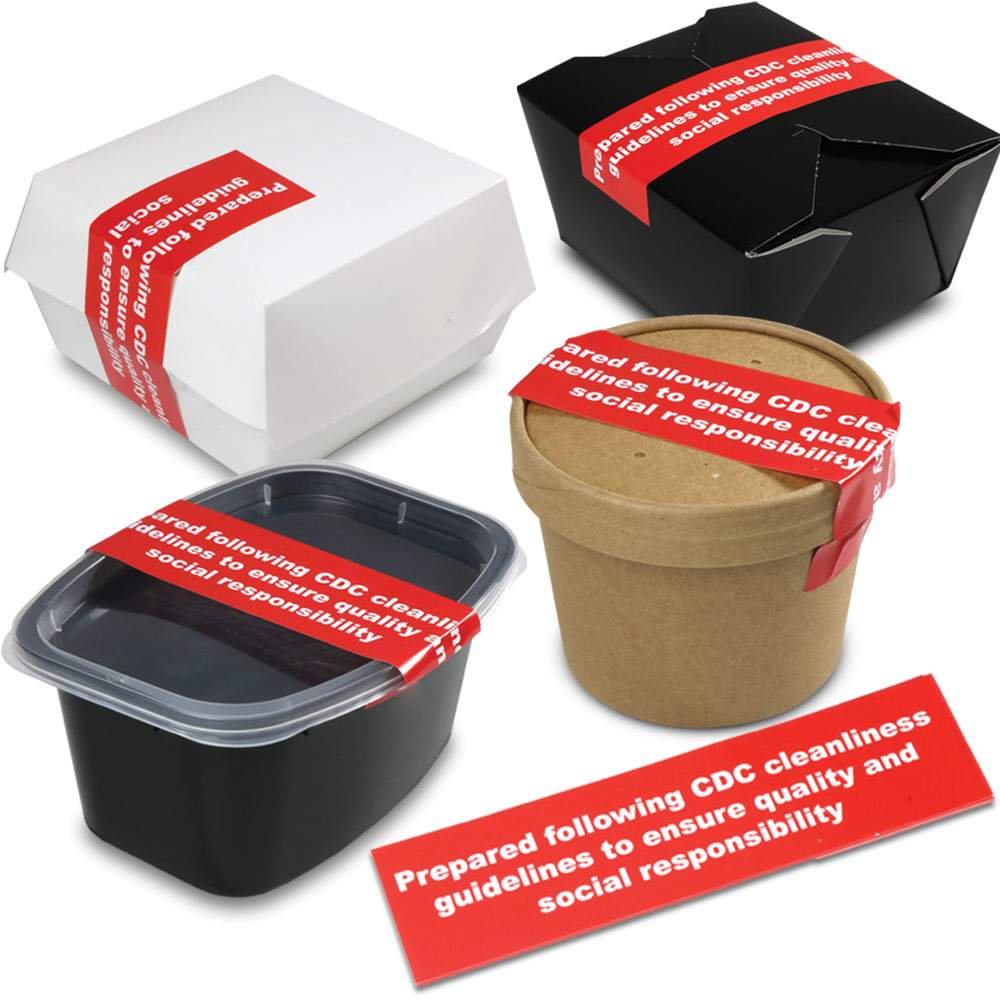
Tamper evident packaging shows a visible sign, such as a torn label or broken seal, if a bag or container has been opened. California’s AB 3336, effective January 1, 2021, requires food facilities to close bags or containers of ready-to-eat food delivered through third-party platforms with a tamper-evident method before the driver takes possession (summary of AB 3336). The law does not require a specific method.
Our red tamper evident food prep labels measure 5.75 x 1.5 inches and work on meal prep containers and delivery bags. Each carries a printed note that the food was prepared following CDC cleanliness guidelines, and they can be customized for your business.
For seals, stickers and bag options, read our guide to tamper evident food packaging or browse tamper evident takeout and delivery packaging.
Is Sustainable Packaging for Food Also Food Safe?
Yes, when it is made for food contact and used within its limits. Sustainability claims and food contact suitability are separate questions, so check both.
PFAS-Free Grease Resistance
PFAS chemicals were long used to grease-proof fast-food wrappers and takeout paperboard. On February 28, 2024, the FDA announced that grease-proofing substances containing PFAS are no longer being sold by manufacturers for food contact use in the U.S. Older inventory may still circulate, and state rules may also apply, so ask suppliers to confirm PFAS-free status in writing.
What Compostable Certification Means
BPI certifies products against ASTM D6400 for plastics and ASTM D6868 for coatings on paper and fiber. Certified items must reach at least 90% disintegration within 12 weeks under industrial composting conditions. Only items with BPI’s separate Home Compostability certification are designed for backyard bins.
Be careful with your own menu and signage claims. The FTC’s Green Guides advise against broad, unqualified “green” or “eco-friendly” claims and say compostable claims should be qualified when items cannot be composted at home or when commercial composting is not available to a substantial majority of consumers.
PLA Heat Limits
PLA softens at temperatures well below those of hot food, which is why PLA deli containers and cups are labeled for cold use. For hot meals, pick molded sugarcane fiber or paperboard instead.
Food Packaging Safety Checklist
Supplier Documentation
- Keep spec sheets or compliance letters for every item that touches food.
- Note each item’s temperature limits, microwave rating and intended food types.
- Get written confirmation of PFAS-free and compostable claims.
Storage of Packaging
- Store packaging off the floor in a clean, dry area.
- Keep it away from cleaning chemicals, pests and raw food splash zones.
- Keep cases closed until use and rotate stock so older inventory goes first.
Handling Hygiene
- Wash hands or change gloves before handling clean containers.
- Touch containers by the outside, never the food contact surface or lid interior.
- Discard anything cracked, wet, dusty or dropped.
- Label containers with contents and allergens before they leave the kitchen.
Frequently Asked Questions
What does food safe mean?
Food safe means a material can contact food under its intended use without transferring harmful substances, odors or tastes. Temperature, food type and contact time all count. A container labeled for cold food only is not safe for hot soup.
What is the difference between food grade and food safe packaging?
Food grade refers to the material itself being suitable for food contact. Food safe packaging is a finished item that stays safe in its intended use. A food grade plastic can still be the wrong choice if it is used above its heat limit.
Does all food on display need to be protected by packaging?
Not necessarily. Packaging is one way to protect displayed food from contamination, but sneeze guards, covered display cases and lids are common alternatives. Exact requirements come from your state and local health code, so confirm with your health department.
What packaging materials are safe for hot food?
PP plastic containers, paperboard soup and takeout containers, molded sugarcane fiber, and aluminum (outside the microwave) handle hot food well. Avoid PET and PLA for anything hot. Always check the manufacturer’s stated use limits.
Is compostable packaging safe for food?
Yes, when it is made for food contact and used as directed. Compostable certification tests how an item breaks down, not its food contact suitability, so confirm both. PLA items in particular are for cold food only.
What is tamper evident packaging?
Tamper evident packaging shows a visible sign, such as a torn label or broken seal, if a bag or container has been opened. California requires it for ready-to-eat food delivered through third-party platforms. The FDA requires tamper-evident packaging for over-the-counter drugs, but there is no general federal requirement for restaurant food.
Choosing food safe packaging comes down to matching each material to the food, temperature and trip it has to handle. If you are replacing coated or plastic items, our compostable and biodegradable food packaging category lists certified options with their use limits on each product page.

Comments are closed.