
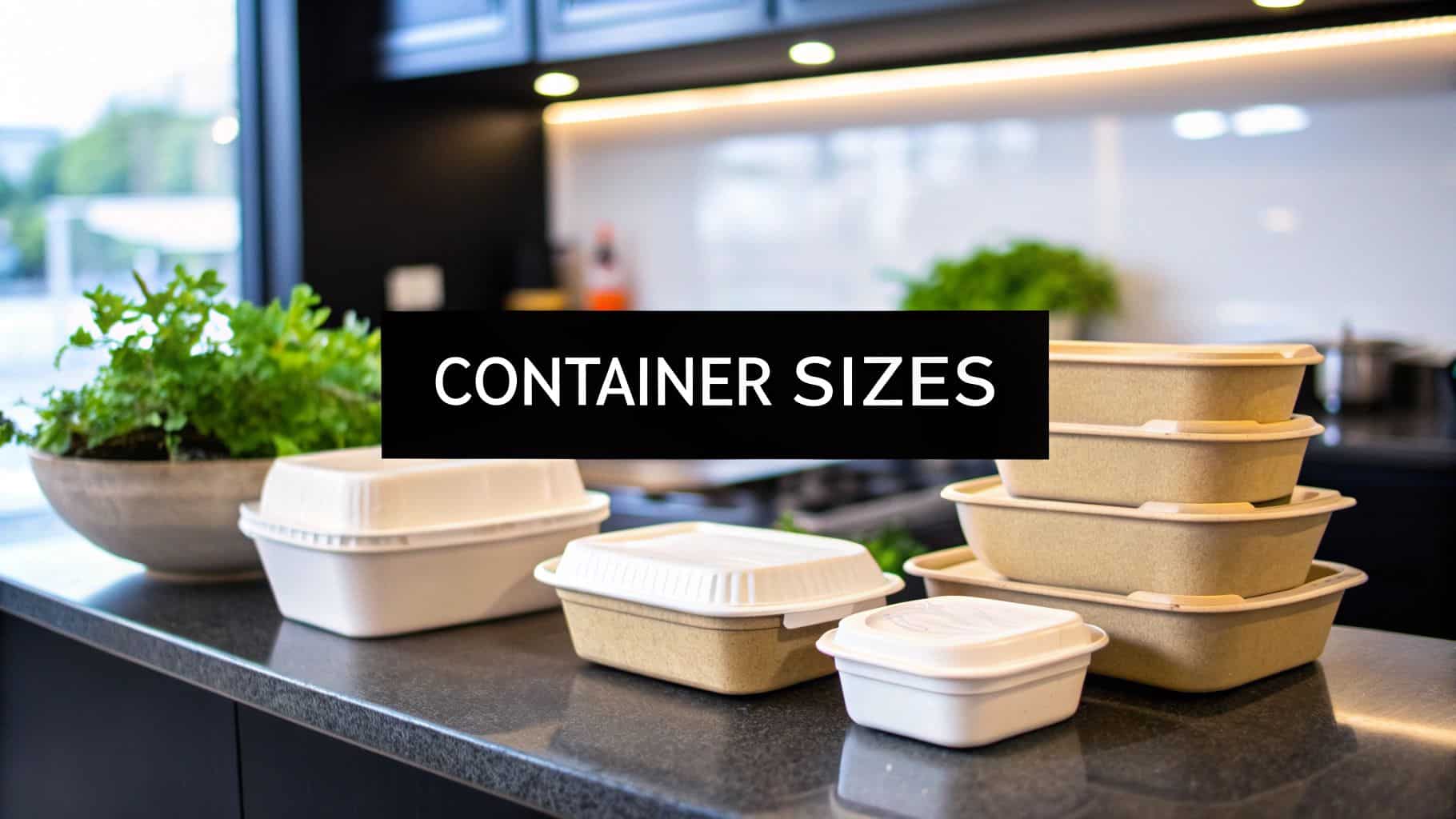
The most common takeout container sizes are 8, 12, 16 and 32 oz for round deli and soup containers, 16 to 48 oz for rectangular and square to-go containers, and numbered sizes (#1, #2, #3, #4 and #8) for fold-top paper boxes. As a quick rule, 8 fl oz equals 1 cup, 16 oz is a pint, and 32 oz is a quart. Choose the smallest size that holds a full portion with room for the lid to close cleanly. Then standardize on a few sizes that share lids.
This guide puts the numbers in one place: four size charts with ounces, cups and dimensions, a menu matching table, and practical ways to keep your container inventory lean.
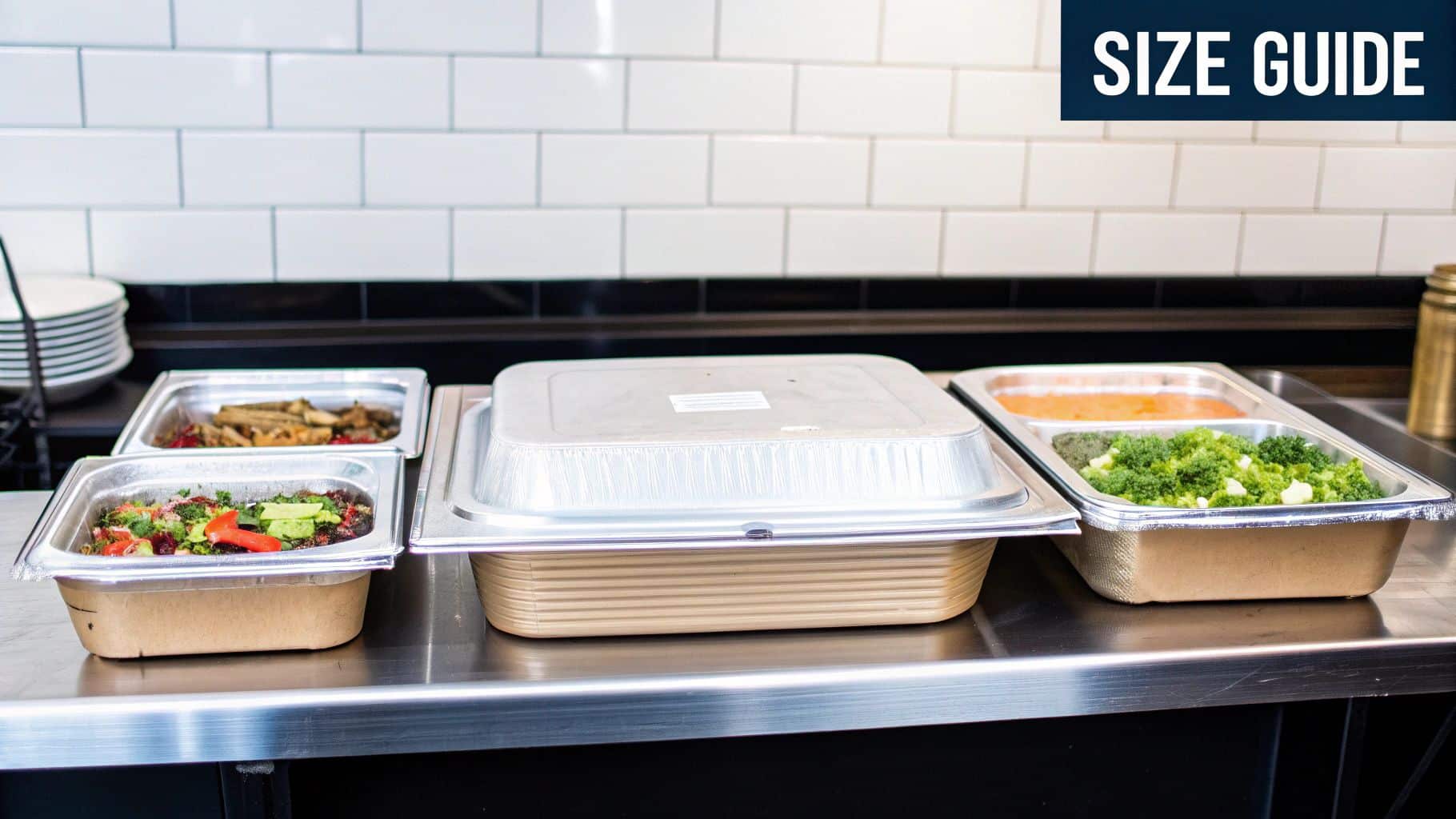
How Takeout Container Sizes Are Measured
Containers are described in two ways: by how much they hold (volume) and by how big they are (dimensions). Fold-top paper boxes add a third system, a number on the box. Knowing which one a supplier uses makes it easier to compare products side by side.
Fluid ounces and cups
Most plastic containers in the US are sold by fluid ounce capacity. These standard US measures cover nearly every size you will order:
- 8 fl oz = 1 cup
- 16 fl oz = 2 cups = 1 pint
- 32 fl oz = 4 cups = 1 quart
- 64 fl oz = 8 cups = half gallon
Listed capacity is the volume of the container filled to the brim. In real service you fill below that line, especially with hot soups and sauces, so the lid seats properly and nothing spills when the lid goes on. A 16 oz container realistically carries a little less than 16 oz of soup.
Dimensions
Dimensions are given in inches. Round containers list the top diameter and height. Rectangular and square containers list length x width x height. Dimensions matter as much as volume: a shallow 38 oz container and a tall 32 oz quart hold similar amounts but suit very different foods. Flat containers work for plated entrees, while tall round containers work for liquids.
Number sizes for fold-top boxes
Paper take out boxes use a numbering system (#1, #2, #3 and so on). The number is a size name, not a measurement, and a higher number does not always mean a bigger box. For example, a #8 box is smaller than a #2. Always check the capacity and dimensions listed for each number.
Deli Container Sizes and Soup Container Sizes
Round plastic tubs are the workhorse of most kitchens. They handle soups, sauces, sides, salads and prep storage. The chart below uses product data from our deli containers line.
| Size | Cups | Dimensions (diameter x height) | Case qty | Typical use |
|---|---|---|---|---|
| 8 oz | 1 cup | 4.66 x 1.66 in. | 240 | Sauces, dips, small sides |
| 12 oz | 1.5 cups | 4.66 in. diameter | 240 | Side salads, cup of soup, rice |
| 16 oz | 2 cups (pint) | 4.66 in. diameter | 240 | Single serving of soup, pint of salad or slaw |
| 24 oz | 3 cups | 4.66 x 4.33 in. | 240 | Large single soup, noodle dishes |
| 32 oz | 4 cups (quart) | 4.66 x 5.66 in. | 240 | Quart of soup, stew or chili to share |
| 64 oz | 8 cups (half gallon) | 4-2/3 x 6-1/2 in. | 120 | Family size soup, catering, bulk sides |
The 8 to 32 oz sizes share the same 4.66 in. diameter, so one lid size covers four or five container sizes. That simplifies ordering and makes it faster to grab the right lid during a rush.
The 16 oz container
The 16 oz container (one pint) is the most versatile round size. It works for a single bowl of soup, a side of pasta salad, or a pint of house dressing for catering. The 16 oz Newspring DELItainer style container measures 4.55 in. across the top and 3.1 in. tall. It is made from recyclable #5 polypropylene, is microwaveable from 0 to 250°F, freezer safe and BPA free, and its lids seal tight to keep soups and sauces secure for to-go orders.
The 32 oz deli container
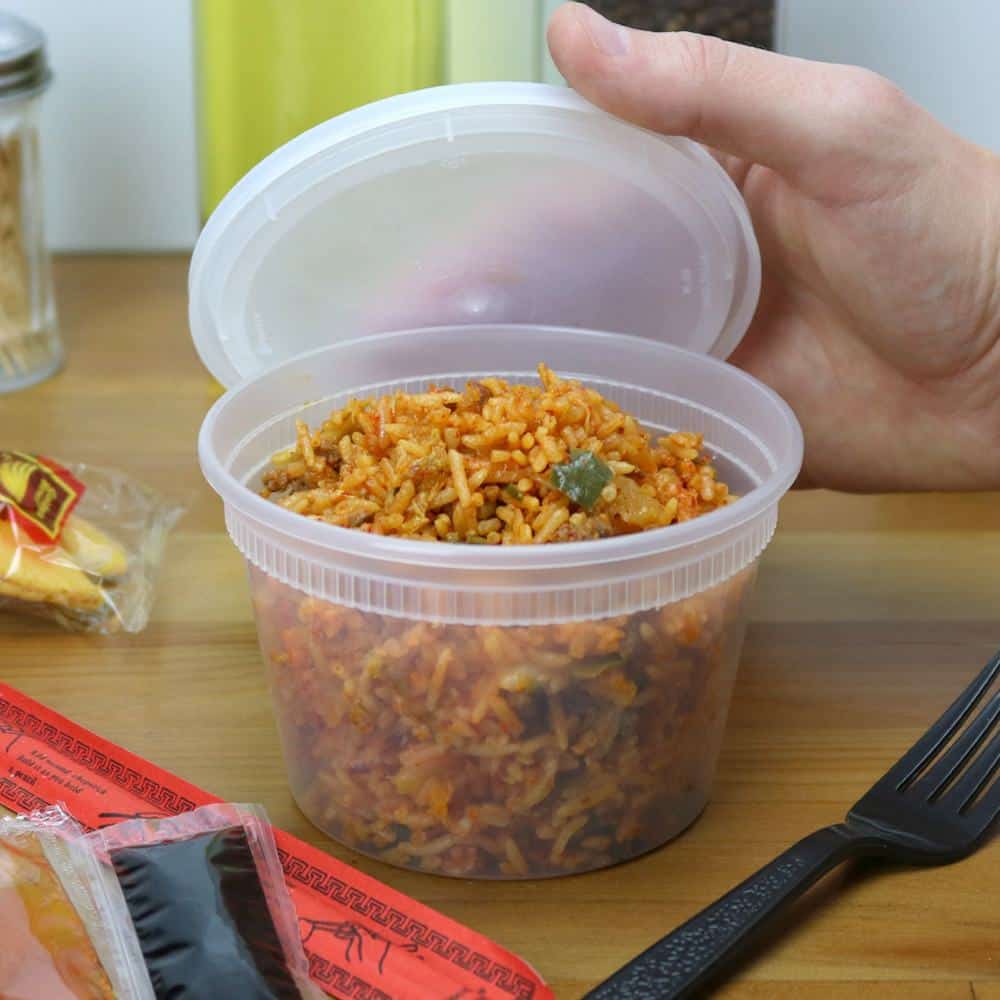
The 32 oz deli container (one quart) is the standard size for a quart of soup, a shareable side, or wonton soup with a family order. Because it has the same diameter as the smaller sizes, it stacks neatly with them on the shelf and in delivery bags. For soup programs, our plastic soup containers cover single servings through quarts. For more on materials, lids and keeping liquids from leaking, see our guide to take out containers for soup.
Plastic Takeout Container Sizes: Rectangular and Square To Go Containers
Flat containers carry entrees, rice plates, salads and anything you want to present in a single layer. The sizes below come from our meal prep containers, which many restaurants also use as everyday to-go packaging.
| Size | Cups | Dimensions (L x W x H) | Typical use |
|---|---|---|---|
| 16 oz rectangular | 2 cups | 7.4 x 5 x 1.5 in. | Small entrees, kids meals, side portions, breakfast items |
| 28 oz rectangular | 3.5 cups | 8.5 x 6 x 2.1 in. | Standard lunch entree, rice bowls, pasta portion |
| 38 oz rectangular | 4.75 cups | 8.27 x 5.8 x 2.16 in. | Full dinner entree, protein with rice or vegetables |
| 48 oz square | 6 cups | 8.5 x 8.5 x 2.25 in. | Entree salads, large plates, shareable portions |
| 48 oz 3-compartment | 6 cups total | 8.75 x 8.75 x 2.5 in. | Combo plates, bento style meals, entree with two sides |
The 28 and 38 oz sizes are close in footprint, so the deciding factor is usually portion size. If your dinner portions regularly fill a 28 oz container to the edge, step up to 38 oz so the lid does not press into the food.
48 oz square containers
A 48 oz square container gives you room for a full entree salad or a large plate without stacking food. The 48 oz square vent-able container has a black base and clear lid with four pre-punched holes that can be opened to let steam and moisture escape. If the holes are left closed, the lid does not vent. It is recyclable Type 5, microwaveable, dishwasher safe and freezer safe, and the raised flat-top lid lets containers stack while adding interior space.
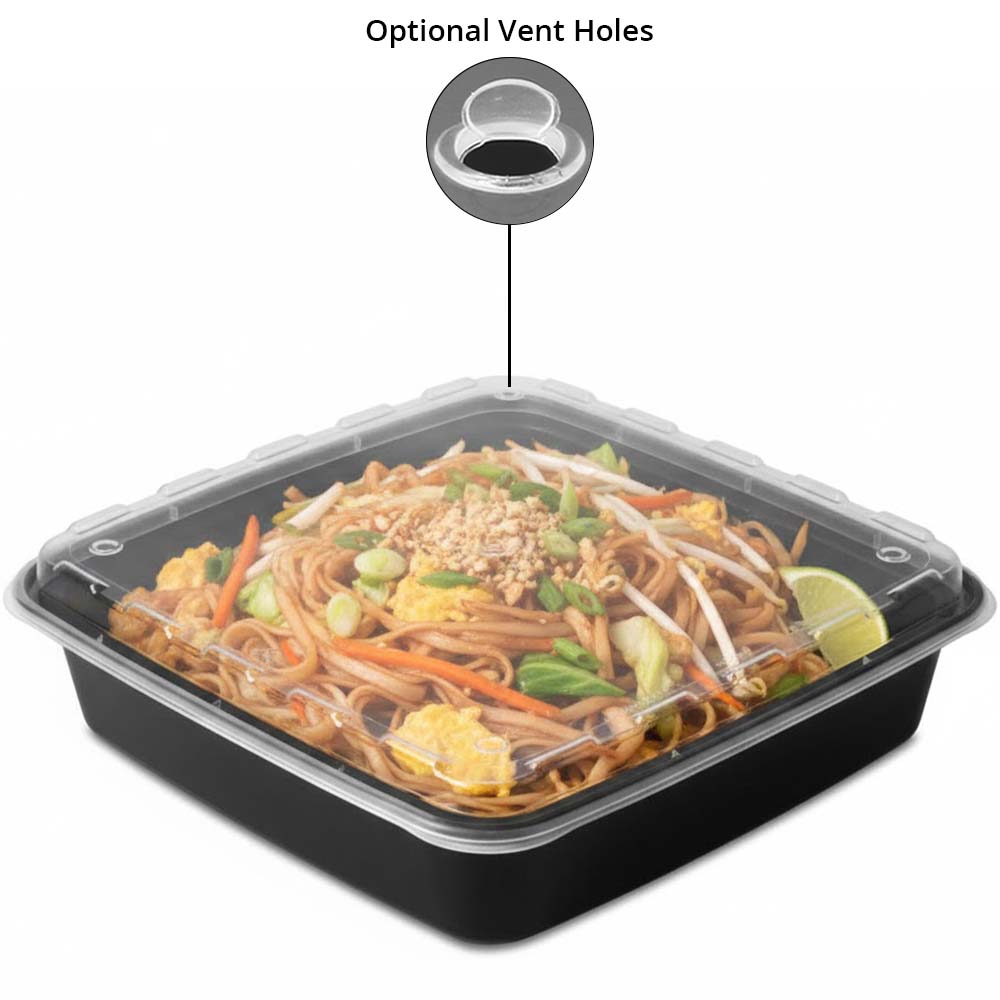
Vented lids are useful for fried or steamed foods that turn soggy when sealed in their own steam. For saucy dishes, keep the vents closed so the container stays as leak resistant as possible.
Take Out Box Sizes: Fold-Top Paper Boxes
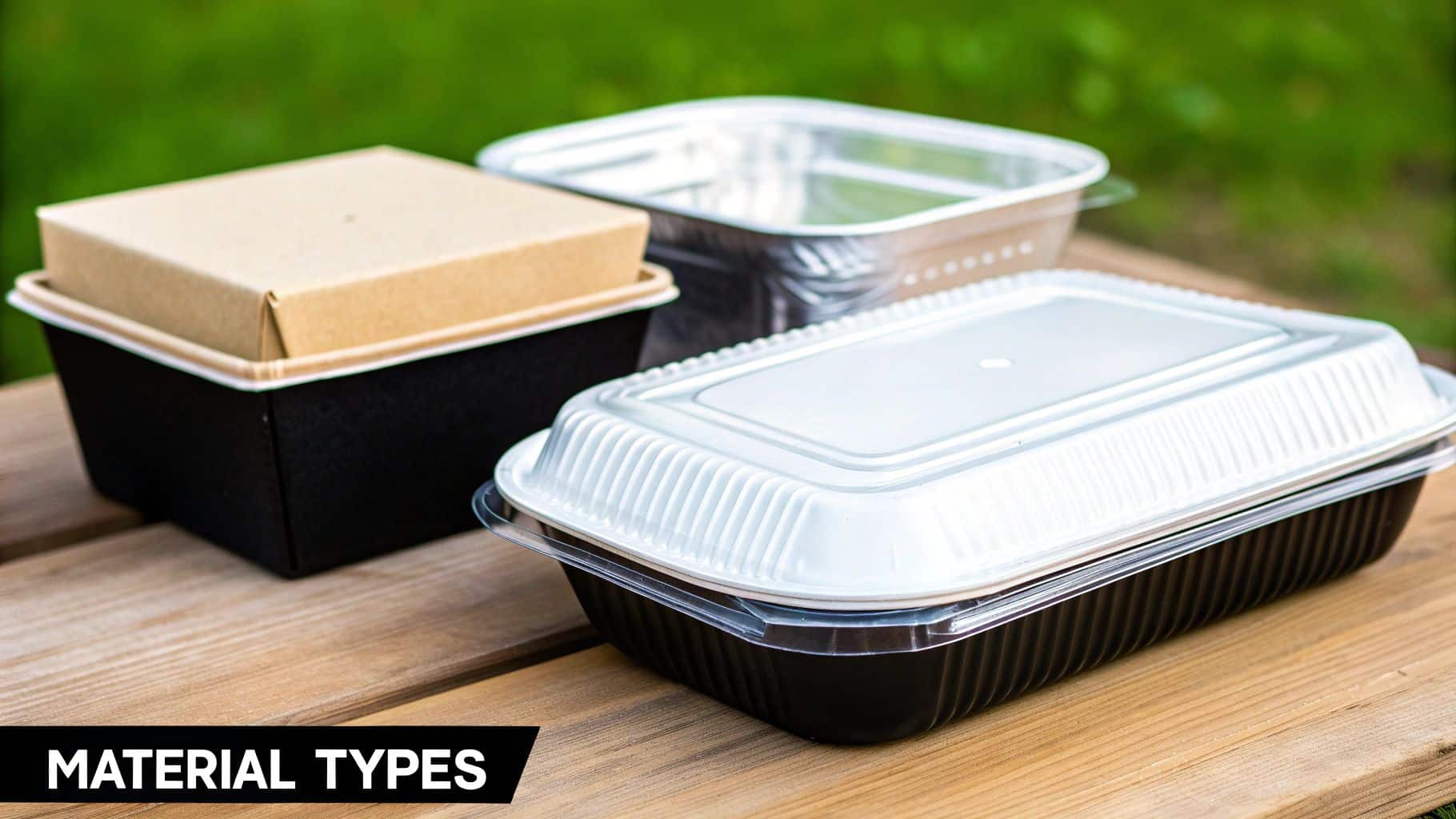
Fold-top paper boxes are a classic choice for noodles, fried rice, sandwiches, fried foods and pastries. The chart uses product data from our kraft take out boxes (Bio Boxes), sorted from smallest to largest capacity.
| Box size | Capacity | Dimensions (L x W x H) | Typical use |
|---|---|---|---|
| #1 | 26 oz | 4.375 x 3.5 x 2.5 in. | Single snack portion, fries, small sides, a few pastries |
| #8 | 29 oz | 6 x 4.75 x 2.5 in. | Single serving of noodles or fried rice, appetizers |
| #2 | 49 oz | 7.75 x 5.5 x 1.88 in. | Sandwiches, wraps, flatter entrees, baked goods |
| #3 | 56 oz | 7.75 x 5.5 x 2.5 in. | Full entrees, combo meals, chicken and sides |
| #4 | 75 oz | 7.75 x 5.5 x 3.5 in. | Large or tall portions, shared meals, catering |
Notice that the #2, #3 and #4 boxes share the same 7.75 x 5.5 in. footprint and differ only in height. That makes the choice simple: use the #2 for low items like sandwiches, the #3 for standard entrees, and the #4 when food sits taller. Box capacity is measured to the top, so leave space for the flaps to fold and lock without crushing the food.
Portion Cup Sizes for Sauces and Dressings
Sauces, dressings and toppings travel best in their own cups. Keeping them separate protects crispy food and lets customers control how much they use. Our portion cups come in six sizes:
| Size | Typical use |
|---|---|
| 0.75 oz | Ketchup, mustard, hot sauce, single condiment serving |
| 1 oz | Dipping sauces, butter, sour cream |
| 1.5 oz | Salad dressing for a side salad, wing sauce |
| 2 oz | Entree salad dressing, salsa, ranch for wings |
| 4 oz | Guacamole, queso, extra sauce, small dessert toppings |
| 5.5 oz | Side of beans, small salsa for sharing, fruit or dessert portions |
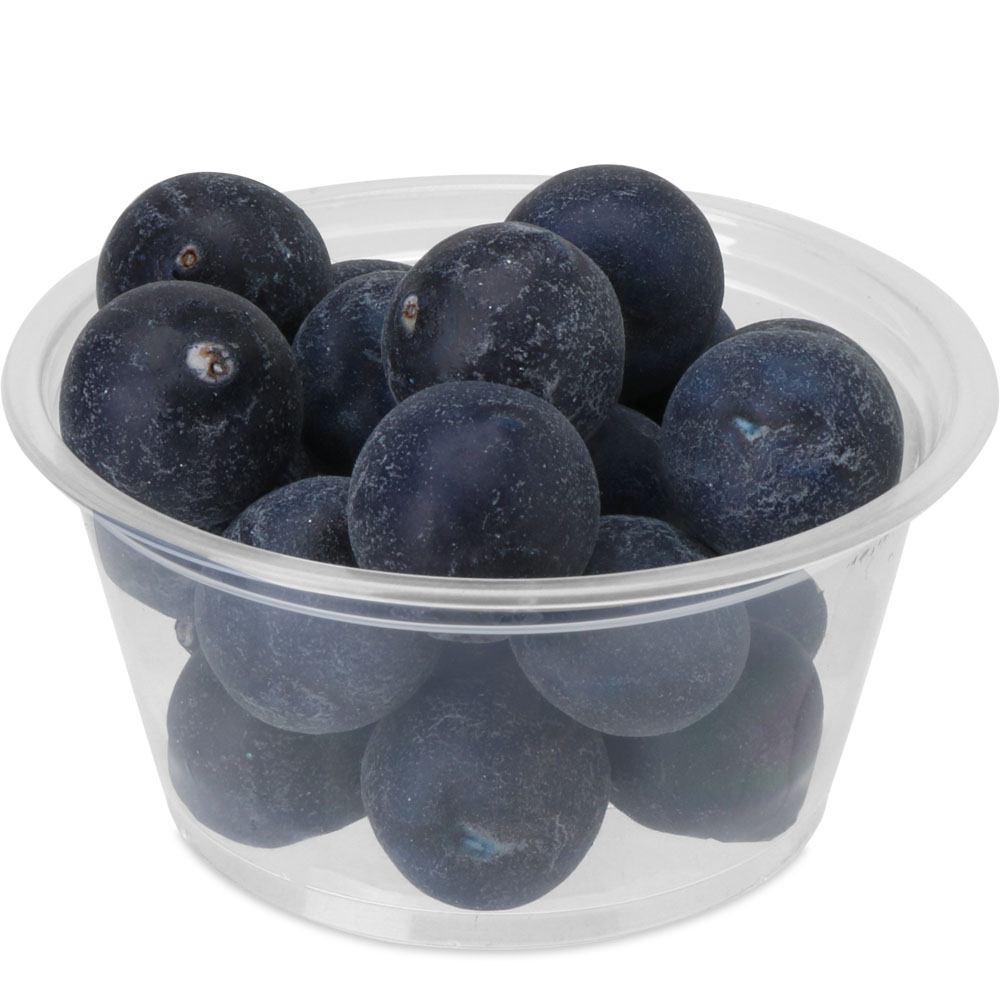
The 2 oz size is a common default for dressings and dips. The 2 oz portion and condiment cup is a rigid cup that holds its shape in use, made from FDA approved polypropylene for direct food contact. Matching lids are sold separately, so order cups and lids together.
Chinese Takeout Container Size Guide
The folded paper pail with a wire handle is the classic container for Chinese takeout. These pails are commonly sold in half pint, pint and quart sizes. Half pints suit sauces, dumplings or small sides. Pints are a typical single portion of rice or an entree. Quarts handle larger entrees, lo mein and family orders.
Many Chinese restaurants now pair paper pails with round plastic quarts for soups like wonton and hot and sour, since liquids travel more securely in tubs with snap-on lids. Fold-top boxes like the #8 and #3 are also popular for noodles and fried rice. If you are curious how the paper pail became a takeout icon, read about the origins of Chinese takeout boxes.
Matching Restaurant Container Sizes to Menu Items
Use this table as a starting point, then adjust to your actual portions. The easiest test is to plate one standard portion into the candidate container, close the lid, and check that food does not touch the lid or slide around.
| Dish | Recommended size |
|---|---|
| Ketchup, hot sauce, single condiment | 0.75 to 1 oz portion cup |
| Salad dressing, salsa, dipping sauce | 1.5 to 2 oz portion cup |
| Guacamole, queso, extra sauce | 4 oz portion cup |
| Coleslaw, potato salad, small side | 8 oz round deli container |
| Cup of soup | 12 oz round |
| Bowl of soup, single serving chili | 16 oz round |
| Quart of soup or stew to share | 32 oz round |
| Family soup or catering side | 64 oz round |
| Kids meal, breakfast plate | 16 oz rectangular |
| Lunch entree, rice bowl | 28 oz rectangular |
| Dinner entree with rice or vegetables | 38 oz rectangular |
| Entree salad | 48 oz square |
| Entree with two sides | 48 oz 3-compartment |
| Fries, small fried appetizer | #1 fold-top box |
| Single serving noodles or fried rice | #8 fold-top box or pint pail |
| Sandwich or wrap | #2 fold-top box |
| Fried chicken plate, combo meal | #3 fold-top box |
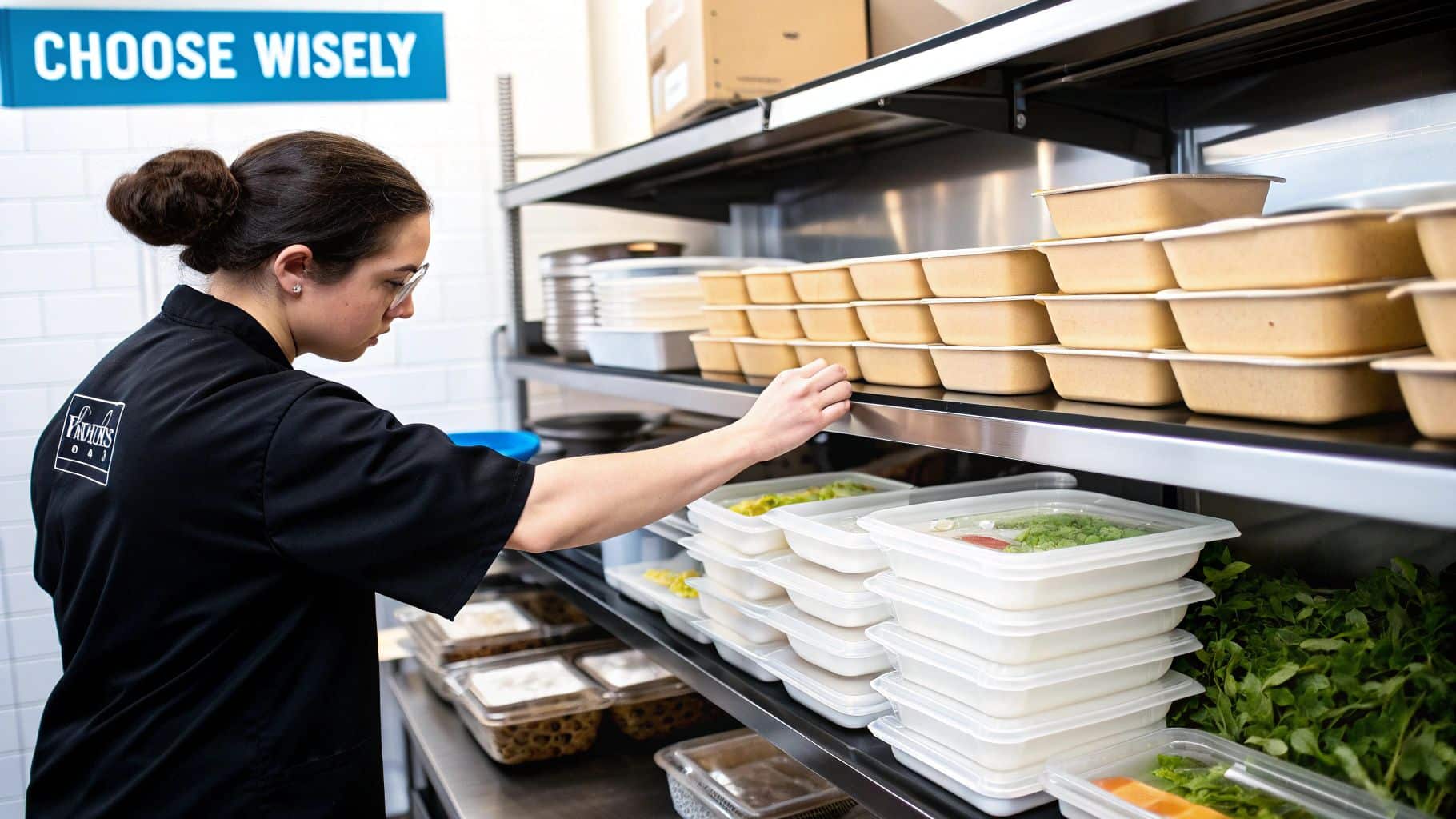
For hot liquids, fill below the brim and let the lid seat fully before bagging. For any product you plan to use with hot food or reheating, check the temperature rating listed for that container before you put it into service.
Compartment Containers
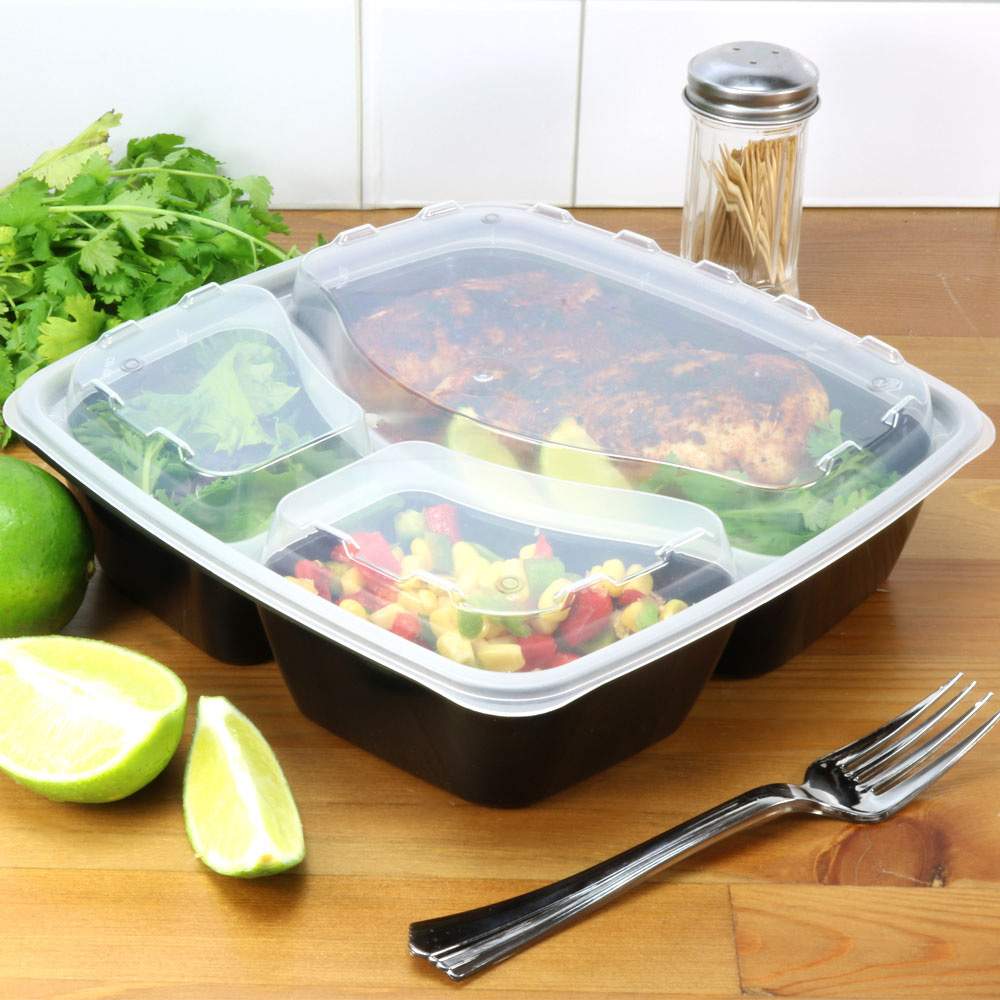
Compartment containers keep components apart so sauces do not soak into rice and crisp items stay crisp. They also make portioning consistent, since each section has a fixed volume.
The 48 oz 3-compartment square container has one large section of approximately 24 liquid ounces and two smaller sections of approximately 8 liquid ounces each. That layout fits a main dish plus two sides, a classic combo plate, or a bento style meal. The lid seals against the compartments to keep food from mixing during transport, and it includes optional pop-out vents. Opening the vents releases steam but reduces leak resistance, so keep them closed for saucy foods. The container is recyclable Type 5 and microwave, dishwasher and freezer safe.
Compartments work best when your menu has a repeatable structure. If every plate is different, a single open container plus a portion cup for sauce is often more flexible. For a comparison of plastic, paper, foam and other options, see what is the best material for to go containers.
Tips to Cut Costs With the Right Sizes
Packaging costs add up quickly when you carry too many SKUs or use containers that are too big for the food. A few simple habits help.
Standardize on a few sizes that share lids
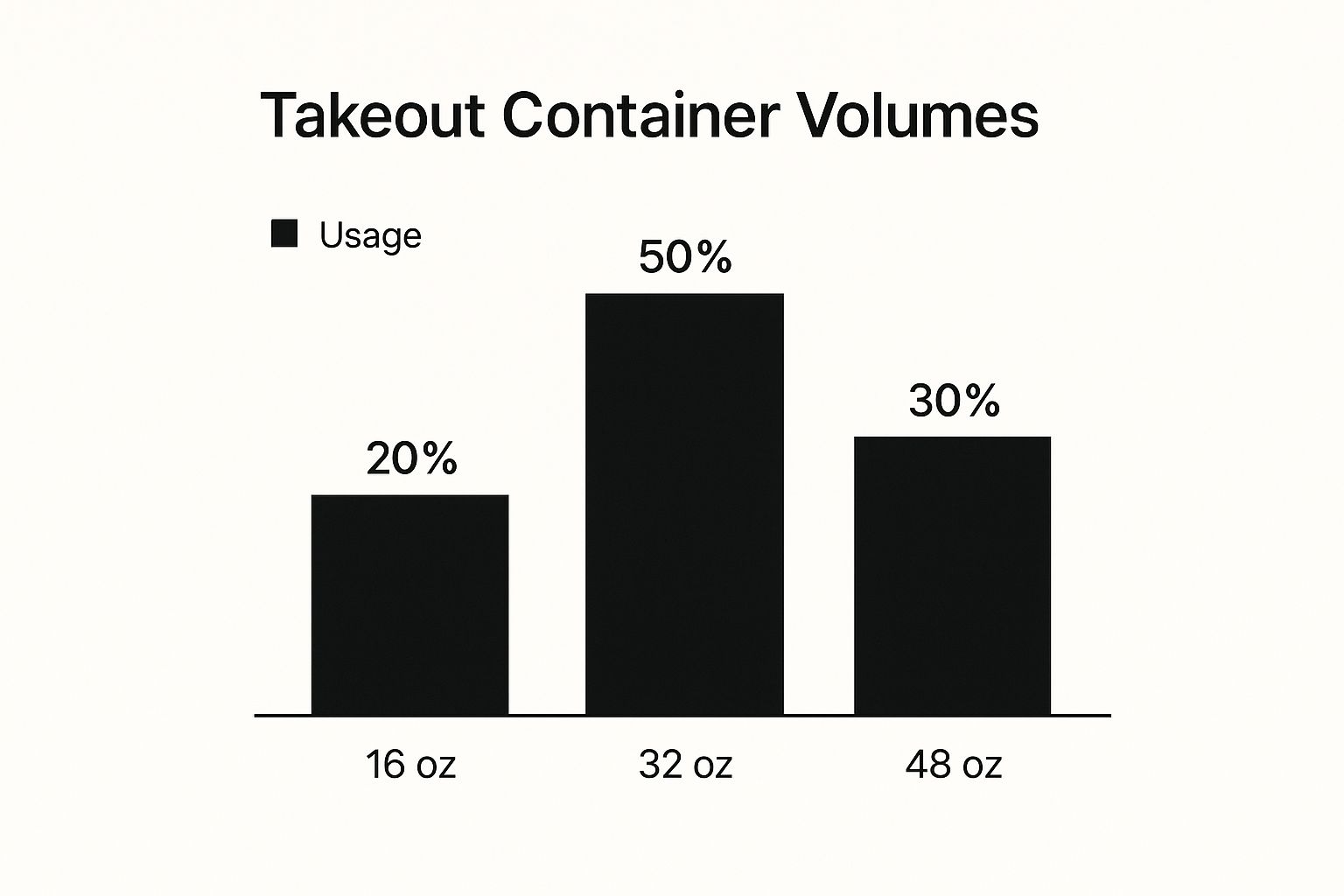
Pick three to five takeout container sizes that cover most of your menu. With round containers, choose sizes from the same diameter family, such as 8, 16 and 32 oz at 4.66 in., so one lid fits all of them. You order fewer lid SKUs, store fewer boxes, and staff spend less time matching lids during service.
Right-size to prevent shifting and spills
An oversized container lets food slide to one side in the bag, which hurts presentation and invites leaks. An undersized container gets overfilled, and the lid either pops or presses into the food. Match the container to a standard portion, and write the correct container next to each menu item on your packing station guide.
Use portion cups instead of bigger containers
Moving dressings and sauces into portion cups often lets you drop to a smaller main container. It also reduces sogginess complaints and gives you a consistent sauce cost per order.
Choose stackable shapes
Containers with flat lids stack in delivery bags and on shelves, which saves space in storage and keeps orders upright in transit. Same-footprint families, like the #2, #3 and #4 boxes or the round 4.66 in. tubs, stack especially well.
Frequently Asked Questions
What size is a 16 oz container?
A 16 oz container holds 2 cups, or one pint. Its dimensions depend on the shape. The 16 oz round deli style container listed above is 4.55 in. across the top and 3.1 in. tall, while a 16 oz rectangular container measures 7.4 x 5 x 1.5 in.
What is the difference between a 16 oz and a 32 oz container?
A 16 oz container is a pint (2 cups) and a 32 oz container is a quart (4 cups), so the 32 oz holds twice as much. In round deli containers, both sizes can share the same 4.66 in. diameter and lid, with the 32 oz simply being taller at 5.66 in. Use 16 oz for single servings of soup or sides and 32 oz for shareable portions.
What are the standard to go box sizes?
Fold-top paper boxes are sold by number. Common sizes are #1 (26 oz), #8 (29 oz), #2 (49 oz), #3 (56 oz) and #4 (75 oz). The #2, #3 and #4 share a 7.75 x 5.5 in. footprint and differ in height.
What are good small to go containers?
For small portions, use 8 or 12 oz round deli containers for sides and soups, a 16 oz rectangular container for small entrees, or a #1 fold-top box for fries and snacks. For sauces and dressings, portion cups from 0.75 to 5.5 oz are the most efficient choice.
What sizes do Chinese food containers come in?
Paper Chinese takeout pails are commonly sold in half pint, pint and quart sizes. Many restaurants also use round plastic pints and quarts for soups and fold-top boxes for noodles and fried rice.
What are the best containers for takeout?
The best container depends on the food. Round tubs with snap-on lids suit soups and liquids, flat rectangular or square containers suit plated entrees and salads, vented containers suit fried and steamed foods, and paper fold-top boxes suit noodles, sandwiches and fried items. Size each one to a standard portion so food does not shift or touch the lid.
Once you know which takeout container sizes fit your menu, settle on a short list and order matching lids with them. You can compare shapes, materials and case quantities across our full range of take out boxes and to go containers.


Comments are closed.